Ebb and Flow: How Your Menstrual Cycle Shapes Your Energy Each Week

Ever wonder why your energy fluctuates from week to week? Discover how the four phases of your menstrual cycle influence your energy, and learn gentle ways to work with your body's natural rhythm instead of fighting against it.
Have you ever woken up on a Tuesday feeling like you could conquer the world, effortlessly checking off your to-do list and breezing through your day, only to find that exactly two weeks later, the exact same tasks feel like moving through molasses? If you have ever blamed yourself for this inconsistency, questioning your willpower or discipline, it is time to take a deep, compassionate breath. You are not lazy, and you are not losing your edge. You are simply cyclical.
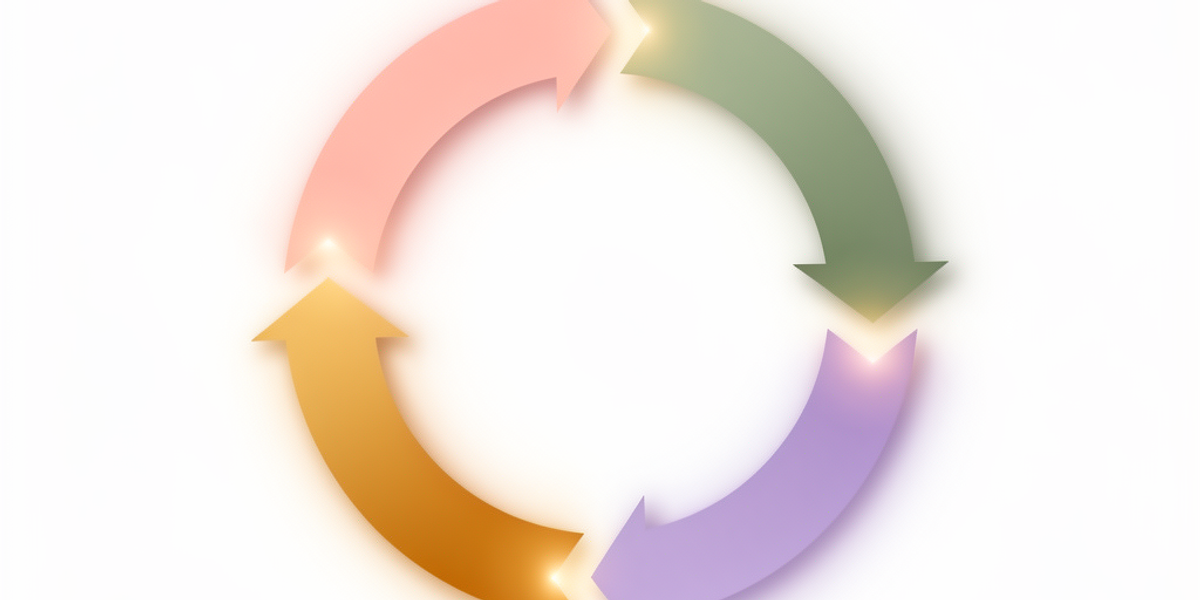
We live in a world that operates on a 24-hour, linear schedule. This framework is largely based on the male hormonal cycle, which resets every single day, offering a relatively predictable and steady stream of energy. But for women and people who menstruate, our bodies operate on an infradian rhythm—a cycle that lasts roughly 28 days (though anywhere from 21 to 35 days is completely normal).
Research suggests that our infradian rhythm affects our brain chemistry, our metabolism, our immune system, and, perhaps most noticeably, our daily energy levels. Expecting yourself to show up with the exact same energy on Day 3 of your cycle as you do on Day 14 is like expecting a tree to blossom in the dead of winter. It goes against nature.
Working with your cycle, rather than fighting against it, is not about finding a perfect, rigid schedule. It is about self-compassion. It is about learning the unique language of your body so you can support yourself through the natural peaks and valleys of your month.
Let's explore the four phases of the menstrual cycle, their unique energy signatures, and how you can begin to gently align your daily life with your internal rhythm.
The Menstrual Phase: The Winter of Your Cycle
When it happens: Days 1-5 (roughly, starting on the first day of full bleeding) Energy signature: Restful, reflective, inward-focused, and low
Think of your menstrual phase as your body's inner winter. During this time, all of your major reproductive hormones—estrogen, progesterone, and testosterone—drop to their lowest levels. This hormonal dip is what triggers the shedding of your uterine lining.
Because your hormone levels are low, and your body is actively doing the physical work of menstruation, your physical energy will naturally be at its lowest point in the month. Many women find that they feel more introverted during this time, craving quiet evenings, cozy blankets, and fewer social obligations. Your brain's right hemisphere—the side associated with intuition and reflection—is highly active right now. It is a beautiful time for journaling, evaluating what is working in your life, and gently letting go of what isn't.
Instead of pushing through the fatigue, this is the time to give yourself permission to do less.
Supportive Practices for Your Menstrual Phase
- Movement: You might try swapping out high-intensity workouts for gentle walks, restorative yoga, or simply stretching on your living room floor. If your body asks for total rest, honor that.
- Work and Productivity: While you likely cannot pause your job, you might try focusing on routine, low-stakes tasks. Avoid scheduling major presentations or brainstorming sessions if you have the flexibility to choose.
- Self-Care: Prioritize sleep. Go to bed an hour earlier, say no to social events that feel draining, and feed your body warm, nourishing, deeply comforting meals.
The Follicular Phase: The Spring of Your Cycle
When it happens: Days 6-13 (following the end of your period up until ovulation) Energy signature: Rising, creative, vibrant, and curious
As your period ends, your brain signals your ovaries to start preparing a new follicle. Welcome to your inner spring. During the follicular phase, your estrogen levels begin a steady climb. Research suggests that as estrogen rises, it boosts serotonin and dopamine in the brain, which can lead to increased feelings of optimism, creativity, and motivation.
Many women find that the brain fog of their menstrual phase lifts, replaced by a fresh, vibrant energy. You might suddenly feel the urge to organize your closet, start a new project at work, or learn a new skill. Your brain is highly primed for structural planning and creative problem-solving right now.
This is a phase of initiation. The energy is light, playful, and outward-moving.
Supportive Practices for Your Follicular Phase
- Movement: As your energy rebounds, you might feel ready to reintroduce more dynamic movements. Hiking, jogging, dance classes, or moderate strength training can feel incredibly supportive right now.
- Work and Productivity: This is the perfect time to brainstorm, set intentions for the month, and tackle complex projects that require creative thinking.
- Self-Care: Feed your curiosity. Read a new book, try a new hobby, or plan a fun outing with a friend. Your body thrives on novelty during this phase.
The Ovulatory Phase: The Summer of Your Cycle
When it happens: Days 14-16 (a brief window in the middle of your cycle) Energy signature: Peak energy, social, communicative, and magnetic
Your inner summer is the shortest phase of your cycle, lasting only a few days around ovulation. Estrogen reaches its absolute peak, and you also experience a slight surge in testosterone. This hormonal cocktail creates a peak in your physical and mental energy.
During ovulation, the communication centers of your brain are highly stimulated. You might find that the words flow more easily, you feel more articulate, and your desire to connect with others is at an all-time high. You are naturally more magnetic, empathetic, and persuasive during this brief window.
However, it is important to acknowledge that every woman's body is different. While many feel on top of the world during ovulation, some women experience ovulation pain (mittelschmerz) or feel a bit overwhelmed by the intense spike in energy. Pay attention to your own unique experience.
Supportive Practices for Your Ovulatory Phase
- Movement: If you enjoy high-intensity interval training (HIIT), heavy weightlifting, or challenging spin classes, this is the time your body is most equipped to handle and recover from intense physical stress.
- Work and Productivity: Schedule your most important meetings, salary negotiations, podcast interviews, or difficult conversations during this window. Your communication skills are naturally enhanced.
- Self-Care: Embrace your social energy. Say yes to dinner parties, networking events, and community gatherings.
The Luteal Phase: The Autumn of Your Cycle
When it happens: Days 17-28 (from ovulation until your next period) Energy signature: Winding down, detail-oriented, focused, and eventually inward
The luteal phase is the longest phase of your cycle, and it is often the most misunderstood. Welcome to your inner autumn. After ovulation, the follicle that released the egg transforms into a structure called the corpus luteum, which begins producing progesterone.
Progesterone is the calming, nesting hormone. In the first half of the luteal phase, you might find that you still have plenty of energy, but it has shifted from the highly social energy of ovulation to a more grounded, task-oriented focus. You might feel a strong desire to organize your inbox, finish up lingering projects, and get your life in order.
As you move into the second half of the luteal phase (the days right before your period), estrogen and progesterone both begin to drop. This is when PMS symptoms can arise. Your energy will begin to wane, and you may feel more sensitive, easily overstimulated, or irritable. Your body is asking you to slow down and prepare for the rest of the menstrual phase.
Supportive Practices for Your Luteal Phase
- Movement: Scale your movement to match your declining energy. Start the phase with moderate exercise, and as your period approaches, transition to pilates, yoga, or walking.
- Work and Productivity: Use the first half of this phase for deep, focused work, editing, and administrative tasks. In the second half, try to wrap up projects so you can rest during your upcoming period.
- Self-Care: Boundaries are your best friend right now. You might try practicing saying 'no' to extra obligations. Prioritize alone time, take warm baths, and ensure you are eating enough, as your body's metabolic rate actually increases slightly during this phase, meaning you may naturally need more fuel.
When You Cannot Pause Your Life
Reading about cycle syncing can sometimes feel a bit utopian. You might be thinking, 'This sounds lovely, but I have a high-stakes presentation on Day 2 of my cycle, and my toddler doesn't care if I am in my luteal phase.'
This is a deeply valid reality. Life does not stop for our cycles, and we cannot always perfectly align our schedules with our hormones. The goal here is not perfection; it is awareness and micro-adjustments.
If you have to give a major presentation during your menstrual phase, you can still honor your body. You might try wearing your most comfortable clothing, taking ten minutes of absolute quiet before you speak, and ordering takeout for dinner that night so you don't have to cook.
If you have a packed social calendar during your luteal phase, you might try stepping away for five minutes of deep breathing in the bathroom, or leaving the party an hour earlier than you normally would. Cycle awareness is about finding small, gentle ways to cushion your energy, no matter what your external life demands.
A Gentle Invitation to Begin
If this information feels new or overwhelming, there is no need to overhaul your entire life today. The best way to start working with your cycle is simply to observe it.
For the next month, you might try keeping a simple journal beside your bed. Each evening, jot down what day of your cycle you are on, how your physical energy felt (High? Low? Jittery? Heavy?), and what your mood was like. Over time, you will begin to see your own unique patterns emerge.
Remember, your fluctuating energy is not a flaw to be fixed; it is a rhythm to be respected. By learning to ride the wave of your cycle, you can stop fighting your body and start supporting the incredible, dynamic system that it is. Offer yourself grace, start small, and trust that your body knows exactly what it is doing.