How to Start Running (and Actually Enjoy It) When You've Never Been a Runner


Discover a gentle, realistic approach to running that honors your unique body and busy life. Learn how the walk-run method and a focus on pacing can help you build confidence and joy in movement, even if you've never been a runner.
If the mere thought of running brings back stressful memories of the dreaded middle school mile, you are absolutely not alone. For so many of us, running was introduced as a punishment, a test we weren't prepared for, or a rigid metric of fitness that left us feeling breathless and defeated. It is completely understandable if you've spent your entire adult life firmly declaring, "I am just not a runner."
But what if running didn't have to feel like a punishment? What if, instead, it could become a quiet pocket of peace in your busy week? A time to step away from your endless to-do list, connect with your body, and breathe in the fresh air?
Every woman's body and life is different, and there is no single "right" way to move. However, if you have been feeling a gentle nudge to try jogging—perhaps for the mental clarity it offers, the convenience of just stepping out your front door, or the empowering feeling of trying something new—there is a way to ease into it that feels supportive, realistic, and actually enjoyable.
Here is a gentle guide to starting a running practice when you've never been a runner, grounded in self-compassion and the understanding that your wellness journey belongs entirely to you.
Redefining What It Means to Be a Runner
Before we talk about shoes or schedules, we need to address the elephant in the room: the stereotype of the "runner." Mainstream fitness culture often paints a picture of runners as people who are intensely competitive, incredibly fast, and pushing through pain at all costs.
Let’s gently set that image aside.
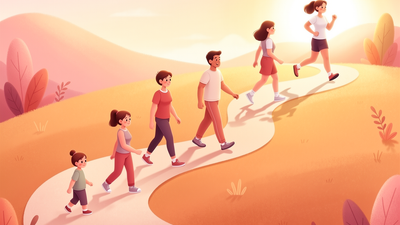
A runner is simply someone who runs. It doesn't matter what you wear, what size your body is, or how fast your feet are moving. If you are moving your body forward at a pace slightly faster than a walk, you are a runner. Many women find that when they release the pressure to look or perform a certain way, movement becomes a joy rather than a chore. You have full permission to claim the title of "runner" on your very first day, even if you spend most of your time walking.
The Magic of the Walk-Run Method
When most beginners try to start running, they lace up their shoes, step outside, and try to run as fast as they can for as long as they can. Usually, this lasts about three minutes before they are gasping for air, their shins are aching, and they are convinced that running simply isn't for them.
There is a much kinder way. It’s often referred to as the walk-run method, popularized by approaches like the Couch to 5K (C25K) program.
The premise is beautifully simple: you alternate between intervals of walking and intervals of jogging. Over time, as your cardiovascular system and your muscles adapt, you gradually increase the jogging time and decrease the walking time.
Research suggests that this interval approach is highly effective for building endurance safely. It gives your heart rate a chance to recover, reduces the repetitive impact on your joints, and makes the entire experience feel mentally manageable. Knowing you only have to jog for sixty seconds before you get to walk again is incredibly empowering.
Gear That Actually Supports You
While running is beautifully minimalist—you don't need a gym membership or expensive equipment—there are two areas where a little investment can make a world of difference in your comfort and confidence.
The Right Shoes
If you take away only one piece of practical advice, let it be this: do not run in ten-year-old fashion sneakers. You might try visiting a local, specialized running store. The staff there are usually incredibly supportive and can watch you walk or jog for a few seconds to assess your gait. They can recommend a shoe that supports your unique foot shape and biomechanics. Yes, good running shoes are an investment, but they are the best defense against shin splints, knee pain, and blisters.
A Supportive Sports Bra
For many women, breast discomfort is a very real barrier to running. Finding a high-impact sports bra that actually fits and supports you can completely change your experience. Look for bras with adjustable straps, encapsulated cups (rather than just compression), and a wide, supportive band. You deserve to move without pain or distraction.
Pacing Yourself: Why Slow is Actually Fast
One of the biggest hurdles for new runners is pacing. We often equate running with sprinting. But endurance running—even just jogging for ten minutes—requires a completely different energy system.
When you are doing your jogging intervals, you should be moving at a "conversational pace." This means you could comfortably speak a full sentence to a friend running next to you without gasping for air.
For many beginners, this conversational pace feels shockingly slow. It might even feel like a "shuffle." It might barely be faster than your brisk walk. That is exactly where you want to be.
Research suggests that spending the vast majority of your training time at a low, easy heart rate is actually the most efficient way to build aerobic capacity. Slow running builds the microscopic blood vessels (capillaries) in your muscles and increases the efficiency of your mitochondria (the energy powerhouses of your cells). By keeping your pace slow and gentle, you are building a strong, enduring foundation. You are also teaching your brain that running is a safe, pleasant activity, which makes you much more likely to want to do it again.
A Gentle, Flexible 8-Week Blueprint
If you thrive on a bit of structure, you might try a progressive walk-run plan. However, please remember that this is a blueprint, not a binding contract. If a week feels too hard, repeat it. If you need an extra rest day, take it.
Aim for three sessions a week, with at least one rest day in between. Always start with a 5-minute brisk walk to warm up, and end with a 5-minute gentle walk to cool down.
Weeks 1 & 2: Building the Habit
- The Pattern: Jog for 1 minute, walk for 2 minutes.
- Repeat: 6 to 8 times.
- Focus: Getting out the door, finding your slow conversational pace, and breathing deeply.
Weeks 3 & 4: Shifting the Balance
- The Pattern: Jog for 2 minutes, walk for 1.5 minutes.
- Repeat: 5 to 6 times.
- Focus: Noticing how your body recovers during the walk breaks. If 2 minutes feels too long, slow your jogging pace down even more.
Weeks 5 & 6: Stretching Your Endurance
- The Pattern: Jog for 5 minutes, walk for 3 minutes.
- Repeat: 3 to 4 times.
- Focus: Mental resilience. You might find your mind wanting to stop before your body needs to. Gently remind yourself that you are safe and capable.
Weeks 7 & 8: Finding Your Flow
- The Pattern: Jog for 10 minutes, walk for 2 minutes.
- Repeat: 2 to 3 times.
- Focus: Settling into a rhythm. Notice the sights and sounds around you. Enjoy the feeling of sustained movement.
Honoring Your Body's Rhythms
As you embark on this journey, it is vital to remember that you do not exist in a vacuum. You are a whole person juggling work, family, relationships, and the natural fluctuations of your body.
Many women find that their energy levels shift dramatically throughout their menstrual cycle. During your luteal phase (the days leading up to your period), your core body temperature is higher, and you might feel more fatigued. A run that felt effortless last week might feel like trudging through mud today. This is not a failure of your fitness; it is a normal physiological response.
If you had a terrible night of sleep, if you are fighting off a cold, or if you are simply overwhelmed by life, it is more than okay to skip a run, swap it for a gentle walk, or do some restorative stretching instead. Pushing through exhaustion often does more harm than good. True wellness is about tuning in and responding to what your body actually needs on any given day, not rigidly adhering to a schedule.
Finding Your "Why"
Finally, as you lace up your shoes, take a moment to reflect on why you are doing this.
When we detach movement from the toxic goals of diet culture—when running is no longer about shrinking our bodies or "earning" our food—we open up space for so much more.
You might run to feel the morning sun on your face. You might run because it’s the only thirty minutes of the day where no one is asking you for a snack or an email reply. You might run to prove to yourself that you can do hard, beautiful things. You might run simply to feel the steady, reassuring beat of your own heart.
Whatever your reason, let it be something that adds value, joy, and peace to your life.
Starting to run when you've never been a runner is an act of bravery. It requires stepping out of your comfort zone and being willing to be a beginner. But with a gentle approach, supportive shoes, and a commitment to pacing yourself and honoring your body, you might just find that you've been a runner all along—you just needed to find your own speed.
So, tomorrow morning, or whenever you feel ready, you might try lacing up your shoes, stepping outside, and taking that first, gentle, beautiful step. The road is yours, and there is absolutely no rush.