Pilates vs. Yoga: How to Choose the Right Practice for Your Body and Goals

Wondering whether Pilates or yoga is better for you? Discover the differences between these practices and find the one that best supports your unique wellness journey, body, and lifestyle.
If you have ever stood in a fitness studio lobby, clutching a mat and wondering if you should be flowing through a Vinyasa or pulsing through a Pilates hundred, you are certainly not alone. In a wellness world that often feels overwhelming and overflowing with options, choosing the right movement practice can feel like just one more task on an already crowded to-do list.
But here is a gentle reminder before we even begin: every woman's body and life is different. There is no one-size-fits-all answer, and the "best" movement is simply the one that makes you feel good, supported, and present in your own skin.
Both Pilates and yoga are beautiful, low-impact practices that celebrate the mind-body connection. They both encourage deep breathing, mindful movement, and taking time out of your busy day just for you. Yet, they have different histories, distinct focuses, and unique benefits.
Whether you are seeking a way to build functional strength to carry your toddler without back pain, looking for a sanctuary to quiet your racing mind, or hoping to find a balance of both, understanding the nuances of Pilates and yoga can help you make an empowered choice. Let's explore these two incredible practices so you can decide what your body is craving right now.
Understanding the Roots: Where Do They Come From?
To understand how Pilates and yoga differ, it helps to look at where they began.
Yoga is an ancient spiritual practice that originated in India thousands of years ago. While the physical postures (asanas) are what we most commonly associate with yoga in the West, they are actually just one of the eight limbs of traditional yoga. The ultimate goal of yoga has always been to unite the mind, body, and spirit, preparing the physical body for long periods of meditation. It is deeply rooted in philosophy, breathwork (pranayama), and spiritual connection.
Pilates, on the other hand, is a much newer system. It was developed in the early 20th century by a German anatomical researcher named Joseph Pilates. Originally called "Contrology," the method was designed to rehabilitate bedridden soldiers during World War I and was later embraced by professional dancers to heal injuries and build core strength. Pilates is fundamentally rooted in physical anatomy, biomechanics, and the precise control of muscles.
The Magic of Yoga: Flexibility, Mindfulness, and Breath
If your daily life feels like a constant juggling act of work, relationships, and household management, yoga can offer a profound sense of grounding. Yoga focuses heavily on flexibility, balance, and expanding your range of motion, but its true magic often lies in what it does for your nervous system.
The Benefits of Yoga
Research suggests that a regular yoga practice can significantly lower cortisol levels, which is the hormone our bodies produce in response to stress. By linking movement with slow, intentional breathing, yoga signals to your brain that you are safe, allowing your nervous system to shift from "fight or flight" into "rest and digest."
In a yoga class, you will often hold poses for several breaths, stretching the muscles and fascia (the connective tissue in your body). This can be incredibly relieving if you carry tension in your hips, shoulders, or neck. Yoga also teaches mindfulness—the practice of being present in the moment without judgment.
Styles of Yoga to Explore
Because yoga is so diverse, you might try a few different styles to see what resonates:
- Vinyasa: A dynamic, flowing class where movement is seamlessly tied to breath. Great for building heat and getting out of your head.
- Hatha: A slower-paced class that focuses on holding basic postures and foundational alignment.
- Yin or Restorative: Deeply relaxing practices where poses are supported by props and held for several minutes. Perfect for profound stress relief and deep tissue stretching.
The Power of Pilates: Strength, Stability, and Posture
If you are looking to build a resilient foundation for your body, Pilates might be exactly what you need. Pilates focuses on the "powerhouse"—the deep core muscles, the pelvic floor, the glutes, and the muscles that support the spine.
The Benefits of Pilates
Many women find that Pilates is a game-changer for alleviating the aches that come from modern life, whether that means hunching over a laptop, carrying heavy groceries, or recovering from childbirth. Rather than focusing on superficial muscles, Pilates targets the deep stabilizing muscles that keep our joints safe and our posture tall.
Pilates movements are highly controlled and precise. You are not just going through the motions; you are actively engaging your brain to isolate and activate specific muscles. This requires immense concentration, which in itself is a form of mindfulness. By strengthening the core and pelvic floor, Pilates supports long-term functional mobility, helping you move through your daily life with greater ease and less pain.
Mat vs. Reformer Pilates
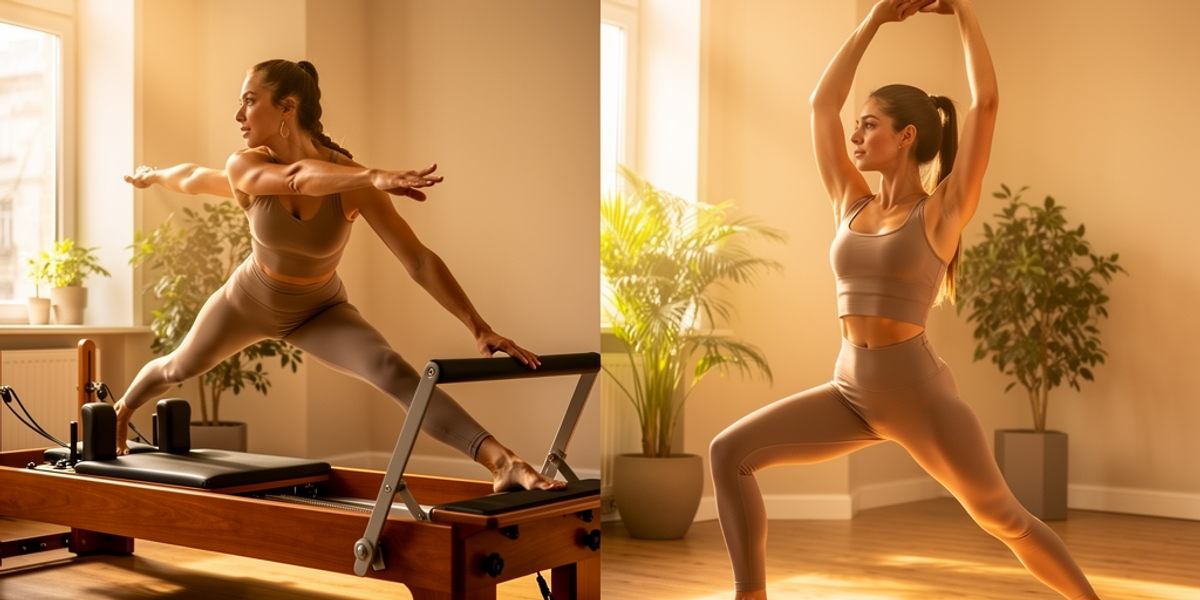
- Mat Pilates: Performed on the floor using your own body weight for resistance. It is accessible, can be done anywhere, and is surprisingly challenging because you have to create your own internal resistance.
- Reformer Pilates: Performed on a specialized piece of equipment with a sliding carriage, springs, and pulleys. The springs provide both resistance to build strength and support to assist you in challenging movements.
How to Choose Based on Your Current Needs
Because every woman's body and life is different, the choice between Pilates and yoga often comes down to what you need today. Your needs might change from year to year, month to month, or even day to day based on your menstrual cycle, stress levels, and energy.
Here is a gentle guide to help you tune in to what might serve you best right now:
When to Lean Toward Yoga
- You are feeling chronically stressed or anxious. The deep, rhythmic breathing and spiritual elements of yoga are unparalleled for calming a frayed nervous system.
- Your body feels stiff and tight. If you wake up feeling rigid or spend hours in the same position, yoga's focus on deep stretching and mobility will feel like a balm to your muscles.
- You want to cultivate self-compassion. Yoga philosophy inherently encourages self-acceptance and honoring exactly where you are in the present moment.
When to Lean Toward Pilates
- You are experiencing back pain or poor posture. By strengthening the deep muscles surrounding your spine and pelvis, Pilates acts as internal scaffolding for your body.
- You want to reconnect with your core and pelvic floor. Postpartum women, or anyone looking to build foundational strength, will benefit immensely from Pilates' targeted approach to the powerhouse.
- You are recovering from an injury. Because of its rehabilitative roots, Pilates is excellent for correcting muscular imbalances and safely rebuilding strength (always with clearance from your healthcare provider, of course).
Why Not Both? The Beauty of Blending
You do not have to choose just one! In fact, many women find that Pilates and yoga complement each other beautifully.
Think of it this way: Pilates gives you the strength and stability to hold your yoga poses safely and with better alignment. Meanwhile, yoga gives you the flexibility and mental spaciousness to move through your Pilates exercises with greater ease and breath awareness.
If you have the time and desire, combining the two can create a wonderfully balanced routine. You might try a challenging Pilates class on a Tuesday to feel strong and centered, and follow it up with a gentle Yin yoga class on a Sunday evening to release the week's tension and prepare your mind for the days ahead.
Practical Tips for Your Movement Journey
Starting a new movement practice can feel intimidating, but it is entirely possible to step into a studio or unroll a mat at home with confidence. Here are a few practical, actionable takeaways to help you begin:
- Start with the basics: Look for classes labeled "beginner," "foundations," or "intro." These classes move at a slower pace and give the instructor time to explain the alignment and purpose of the movements.
- Communicate with your instructor: Before class begins, let the teacher know if you are new, if you are pregnant or postpartum, or if you are working with any injuries. A good instructor will offer modifications to keep you safe and comfortable.
- Focus on the feeling, not the look: It is easy to look around the room and compare your flexibility or strength to others. Gently remind yourself that movement is not a performance. Close your eyes if you need to, and focus entirely on how the movement feels inside your own body.
- Embrace at-home options: If going to a studio feels like too much right now, there is a wealth of high-quality, supportive instructors on platforms like YouTube. You can explore different styles in the comfort and privacy of your living room.
- Give yourself grace: Some days your balance will be off. Some days your core will feel tired. That is completely normal. Honor your energy levels and remember that resting is just as productive as moving.
Honoring Your Unique Path
At the end of the day, the debate of Pilates versus yoga isn't really a debate at all. They are simply two different tools in your wellness toolbox.
Whether you choose the mindful, expansive flow of yoga, the precise, stabilizing strength of Pilates, or a joyful mix of both, the most important thing is that you are carving out time to care for yourself. You deserve to inhabit a body that feels like a safe, comfortable home.
Take a deep breath and ask yourself: what does my body crave today? Does it need to stretch and release, or does it need to engage and strengthen? Trust whatever answer arises. Your body is incredibly wise, and it will always guide you exactly where you need to go.