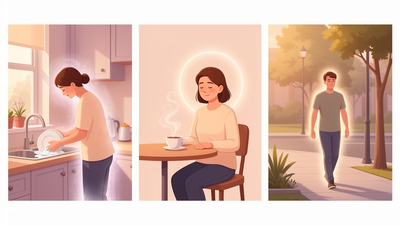
Weathering the Storm: How to Process Difficult Emotions Without Suppressing Them


Discover how to process difficult emotions without suppressing them using the RAIN method. Learn gentle, practical ways to sit with uncomfortable feelings, nurture your nervous system, and find balance in a way that honors your unique life.
The Hidden Cost of Pushing Through
Imagine a typical weekday. Your inbox is overflowing, you are juggling the needs of your family or friends, and suddenly, a wave of profound anxiety, frustration, or sadness washes over you. If you are like most women navigating the complexities of modern life, your first instinct might be to take a deep breath, paste on a smile, and simply push through it.
We live in a culture that frequently equates emotional suppression with strength. We are taught to numb our discomfort with endless scrolling, toxic positivity, or the relentless pursuit of productivity. We tell ourselves, "I don't have time to feel this right now," or we dismiss our own pain by comparing it to others.
But research suggests that chronically suppressing our emotions doesn't make them disappear. Instead, it acts like holding a beachball underwater. It takes an immense, exhausting amount of energy to keep that ball submerged, and eventually, it's going to burst to the surface—often when we least expect it. Unprocessed emotions can manifest as chronic tension, fatigue, irritability, and a dysregulated nervous system.
So, how do we break this cycle? How do we actually process difficult emotions without letting them completely derail our day?
Enter the RAIN method.
A Gentle Framework: The RAIN Method
Originally coined by mindfulness teacher Michele McDonald and beautifully expanded upon by psychologist and author Tara Brach, RAIN is an acronym that offers a gentle, structured pathway for sitting with uncomfortable feelings.
RAIN stands for:
- Recognize what is happening
- Allow the experience to be there, just as it is
- Investigate with interest and care
- Nurture with self-compassion
What makes RAIN so powerful is that it is not a rigid set of rules or a one-size-fits-all prescription. Every woman's body, mind, and life circumstances are wonderfully different, and this practice can adapt to fit your unique capacity on any given day. It is an invitation to become a compassionate friend to yourself. Let's break down how to walk through each step.
Step 1: Recognize What Is Happening
The first step in processing an emotion is simply acknowledging that it is there. This sounds incredibly basic, but in our fast-paced lives, we often rush right past our feelings into reactive behaviors. We snap at our partners, we withdraw, or we dive into busywork before we even realize we are feeling hurt or overwhelmed.
To "Recognize" means to consciously pause and gently name the emotion. You are stepping out of the storyline of why you are upset and simply identifying the feeling itself.
How to Practice Recognition
When you feel an emotional shift, take a deliberate pause. You might mentally whisper to yourself, "Ah, this is anxiety," or "I am feeling a lot of grief right now," or "There is a heavy sense of overwhelm here."
Notice the language: "I am feeling anxiety" rather than "I am an anxious person." This subtle shift in phrasing creates a tiny bit of space between you and the emotion. It reminds you that the feeling is a temporary visitor, not a permanent part of your identity.
Step 2: Allow the Experience to Be There
Once you have recognized the emotion, the next instinct is usually to try to fix it, judge it, or run away from it. We think, "I shouldn't be feeling this way," or "I need to snap out of this immediately."
The "Allow" step asks us to drop the resistance. It means letting the emotion exist, just for this moment, without trying to manipulate it. Allowing does not mean you like the feeling, nor does it mean you agree with the thoughts generating it. It simply means you are acknowledging reality: the emotion is already here.
How to Practice Allowing
Many women find that mentally offering a word of consent can help soften their inner resistance. You might try saying to yourself, "Yes," or "It's okay that this is here," or "I consent to feeling this for right now."
If the emotion feels particularly intense, allowing might just look like not actively fighting it. It is the emotional equivalent of unclasping your hands and letting your shoulders drop. You are no longer at war with your own internal experience.
Step 3: Investigate with Interest and Care
Once you have recognized and allowed the emotion, you can begin to "Investigate." This is not a cerebral, intellectual investigation where you analyze your childhood or try to figure out exactly who is to blame for your bad mood. Instead, this is a somatic (body-based) investigation.
Emotions live in the body. They are physiological events. By shifting your attention away from your spinning thoughts and into your physical sensations, you ground yourself in the present moment.
How to Practice Investigation
Direct your attention inward with the gentle curiosity of a scientist or a caring friend. Ask yourself:
- Where am I feeling this in my body right now?
- Is there a tightness in my chest? A fluttering in my stomach? Tension in my jaw?
- If this feeling had a temperature, what would it be? Does it feel heavy or light?
As you investigate, be vigilant against the inner critic. If you notice judgment arising ("I'm so stupid for letting my stomach get in knots over this email"), gently acknowledge the judgment and return your focus to the physical sensation. You are simply observing the weather patterns of your own nervous system.
Step 4: Nurture with Self-Compassion
The final step of RAIN is perhaps the most crucial, especially for women who are so accustomed to nurturing everyone else around them. "Nurture" involves responding to your own pain with kindness, care, and self-compassion.
When we are hurting, our inner dialogue often turns harsh and demanding. Nurturing is the deliberate choice to offer yourself the exact opposite: warmth, reassurance, and safety.
How to Practice Nurturing
Start by asking the vulnerable part of yourself, "What do you need right now?"
The answer will vary wildly depending on the day, the emotion, and your unique life.
- Physical soothing: You might try placing a gentle hand over your heart or on your cheek. The physical warmth and pressure can signal to your nervous system that you are safe.
- Words of affirmation: Offer yourself a kind, internal message. "I'm here with you." "I know this is hard, but you are safe." "It makes sense that you feel this way."
- Actionable care: Sometimes nurturing requires an action. It might mean stepping outside for five minutes of fresh air, making a warm cup of herbal tea, setting a boundary with a coworker, or deciding to leave the dishes in the sink and go to sleep early.
Making RAIN Work for Your Unique Life
One of the most beautiful aspects of the RAIN method is its flexibility. You do not need a quiet meditation cushion, an hour of free time, or a perfectly serene environment to practice it. Real life is messy, loud, and unpredictable.
You can do a "micro-RAIN" practice in three minutes while sitting in your parked car before walking into the grocery store. You can practice it while folding laundry or while hiding in the bathroom for a moment of peace away from your toddlers.
It is also vital to honor your own unique nervous system. Because every woman's body and history is different, sitting with difficult emotions can sometimes feel overwhelming, especially if you have a history of trauma. If you find that investigating your emotions causes you to spiral into panic or deep distress, it is completely okay to back away. Nurturing yourself might look like intentionally distracting yourself, calling a trusted friend, or seeking the support of a licensed therapist. Processing emotions should never be a test of endurance.
The Journey Away from Perfection
Practicing RAIN is not about achieving a state of permanent zen or never feeling upset again. The goal of emotional wellness is not to feel purely positive emotions all the time—that is an impossible, exhausting standard. The goal is to build resilience, to trust yourself to handle whatever emotional weather rolls in, and to know that you can sit through the storm without abandoning yourself.
When we stop viewing our difficult emotions as enemies to be conquered or suppressed, we create space for profound healing. We learn that our sadness has something to teach us, our anger is pointing to a boundary that needs tending, and our anxiety is just a part of us asking for safety.
A Gentle Invitation
The next time you feel a surge of frustration, a pang of loneliness, or the familiar weight of overwhelm, you might try experimenting with RAIN. You don't have to do it perfectly. Just pause. Recognize the feeling. Allow it to be there. Investigate where it lives in your body. And finally, offer yourself a moment of genuine, nurturing care.
You spend so much of your life showing up for others. You deserve that exact same warmth, patience, and compassion from yourself.