Your Personal Energy Audit: A Self-Assessment Guide to Reclaiming Your Balance

Feeling depleted despite doing "everything right"? A personal energy audit helps you gently map your unique energy givers and drainers. Discover how to reclaim your vitality with this supportive, practical self-assessment framework.
Have you ever slept for a full eight hours, yet woken up feeling completely depleted? Or perhaps you have reached the end of a seemingly normal Tuesday feeling as though you have just run an emotional marathon. If this sounds familiar, you are absolutely not alone. We live in a fast-paced world that frequently asks women to be everything to everyone, often at the expense of our own vitality.
When we feel exhausted, the common cultural response is to prescribe a rigid solution: a new time-management app, a restrictive wellness regimen, or a forced positive mindset. But toxic positivity and one-size-fits-all advice rarely get to the root of the issue. Every woman's body and life is different. What invigorates your best friend might completely exhaust you, and the routines that worked for you in your twenties might not serve you in your thirties, forties, or beyond.
Instead of trying to force yourself into a mold that doesn't fit, you might try a more compassionate approach: the Personal Energy Audit.
What is a Personal Energy Audit?
A personal energy audit is a structured, gentle self-evaluation framework. It is not about judging yourself for being tired or figuring out how to squeeze more productivity out of your day. Rather, it is about mapping your personal "energy givers" and "energy drainers" across the different areas of your life.
Think of your energy as a bank account. Some activities, people, and environments make deposits into your account (givers). Others make withdrawals (drainers). When we operate in a constant state of overdraft, we experience burnout, brain fog, and chronic fatigue.
By taking a curious, non-judgmental look at where your energy is actually going, you can find small, actionable ways to balance the scales. Many women find that simply naming their drainers provides a profound sense of relief and validation.
Preparing for Your Audit
Before we dive into the specific pillars of your life, it is important to set the right tone for this exercise. This is a judgment-free zone. If you discover that cooking dinner—something society often tells women they should enjoy—is your biggest energy drainer, that is perfectly okay. The goal is data collection, not self-criticism.
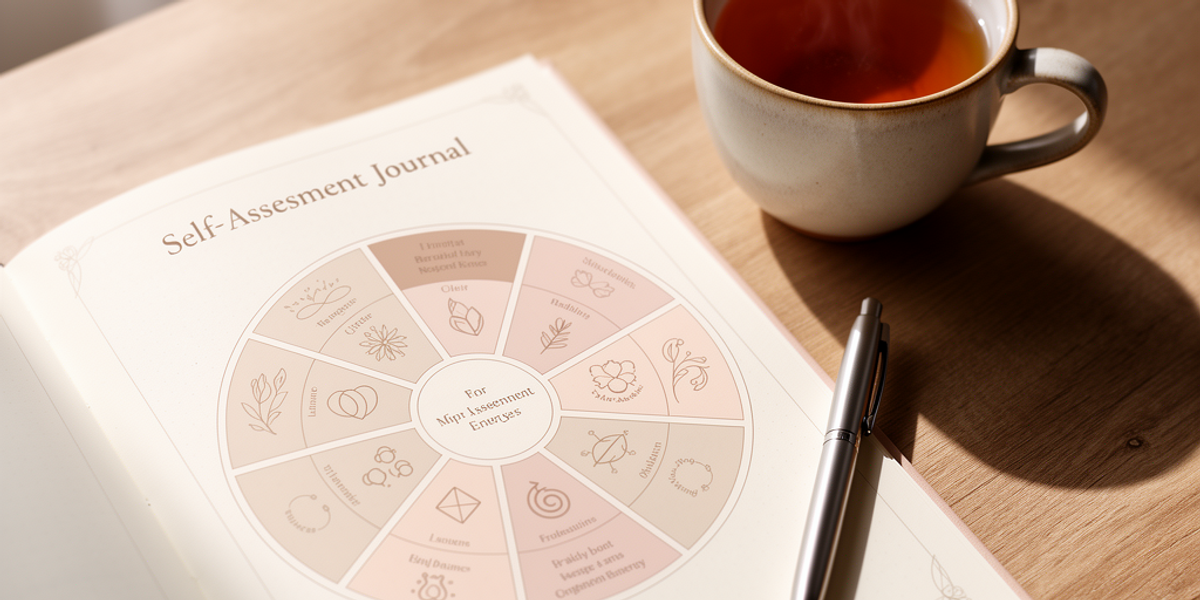
To conduct your audit, you will need a way to track your observations for about three to five days. You can use a dedicated journal, a note-taking app on your phone, or a simple piece of paper. As you go through your day, pause periodically to ask yourself: How is my energy right now? What did I just do, and how did it make me feel?
Let's explore the four main pillars to observe during your audit.
Pillar 1: Relationships and Social Connections
Our interactions with others have a profound impact on our nervous systems. Research suggests that emotional contagion—the phenomenon of "catching" the emotions of those around us—can significantly impact our daily energy levels.
Identifying Relationship Drainers
Pay attention to how your body feels after interacting with specific people. Do your shoulders tense up when a certain name pops up on your phone? Do you feel emotionally hollowed out after a lunch date that was supposed to be fun? Drainers in this category often include relationships that lack reciprocity, people who constantly vent without seeking solutions, or environments where you feel you have to mask your true self.
Identifying Relationship Givers
Conversely, notice who leaves you feeling lighter. These are the people with whom you can sit in comfortable silence, the friends who make you laugh until your sides ache, or the colleagues who actively share the mental load. Relationship givers make you feel seen, heard, and accepted exactly as you are.
Pillar 2: Work and Daily Responsibilities
This pillar encompasses both your professional career and the invisible labor that often goes unnoticed—managing household schedules, remembering birthdays, and planning meals.
Identifying Work Drainers
It is rarely the work itself that drains us entirely; it is often how we work. Task-switching, constant interruptions, and vague expectations are massive energy leaks. Research suggests that the cognitive load of carrying a mental "to-do" list all day is a primary contributor to chronic fatigue in women. Pay attention to specific tasks: Does navigating your inbox feel like wading through molasses? Does the 5:00 PM transition from "work mode" to "home mode" leave you feeling frantic?
Identifying Work Givers
Even in a demanding job or a busy household, there are usually pockets of energy. You might find that you feel energized after a collaborative brainstorming session, or perhaps you find deep satisfaction in organizing a messy spreadsheet. At home, maybe the repetitive rhythm of folding laundry while listening to an audiobook feels restorative rather than depleting.
Pillar 3: Habits and Routines
When we talk about habits, it is crucial to leave diet culture and rigid moralizing at the door. There are no "good" or "bad" habits here—only habits that serve your unique biology and habits that don't.
Identifying Habit Drainers
Notice the activities you turn to for rest that actually leave you feeling more depleted. For example, many women find that "revenge bedtime procrastination"—staying up late scrolling through social media to reclaim a sense of personal time—ultimately drains their energy the next day. Other drainers might include skipping meals when you are busy, relying on caffeine to push through natural afternoon slumps, or engaging in intense workouts when your body is actually craving gentle movement.
Identifying Habit Givers
What habits make you feel grounded in your body? This might look like a five-minute stretching routine in the morning, taking a short walk without your phone, or nourishing your body with a warm, comforting meal. Pay attention to the somatic (physical) sensations of your habits. If a habit makes your chest feel open, your breathing steady, and your mind clear, it is likely a powerful energy giver.
Pillar 4: Environment and Spaces
Our physical surroundings are constantly sending sensory information to our brains. If our environment is chaotic, our internal state often mirrors that chaos.
Identifying Environmental Drainers
Sensory overload is a real and valid energy drainer. This might look like harsh overhead lighting in your office, a constant stream of background noise, or visual clutter on your kitchen counters. Notice if you feel a subtle hum of anxiety when you walk into certain rooms. You might be surprised to find that simply being in a highly stimulating environment drains your battery much faster than the tasks you are actually performing.
Identifying Environmental Givers
What spaces make you exhale deeply? An environmental giver could be a cozy corner of your living room with soft lighting, a workspace positioned near a window with natural light, or stepping outside to feel the fresh air on your face. Elements like comforting textures, pleasant scents, and organized spaces can act as passive energy chargers throughout your day.
Analyzing Your Findings
After tracking your energy for a few days, sit down with your notes and a warm beverage. Look for the patterns.
Are there specific times of day when your energy consistently crashes? Are there certain boundaries that are repeatedly being crossed? What surprised you the most? You might discover that a hobby you thought was relaxing is actually a source of frustration, or that a mundane chore actually provides a much-needed mental break.
Remember, this is not an exercise in perfection. You will never be able to eliminate all of your energy drainers. Some drainers—like caring for a sick child, navigating a difficult season at work, or managing a chronic illness—are simply realities of life. The goal is not to achieve a flawless, stress-free existence, but rather to create enough awareness that you can intentionally tip the scales back in your favor.
Finding Your Biggest (and Gentlest) Wins
Once you have your data, it can be tempting to try and overhaul your entire life by Monday morning. Please resist this urge. Radical overhauls are just another form of energy drainage in disguise. Instead, you might try focusing on one or two small, gentle shifts.
1. Neutralize a Drainer
Look at your list of drainers and identify one that you actually have the power to change. If the morning rush is depleting you, you might try laying out your clothes the night before. If a specific work meeting always leaves you exhausted, you might try scheduling a 15-minute block of "do nothing" time immediately afterward to let your nervous system recover. If social media is draining you, you might try setting an app limit or curating your feed to only include accounts that make you feel supported.
2. Amplify a Giver
Next, look at your list of energy givers. How can you intentionally weave just one more of these into your daily routine? If you noticed that drinking your morning tea in silence gives you a boost, can you wake up ten minutes earlier to protect that time? If connecting with a specific friend energizes you, can you schedule a recurring monthly phone call?
3. Create a "Soft Landing"
Many women find immense benefit in creating transition rituals—small practices that signal to your brain that it is time to shift gears. If you are transitioning from work to home life, you might try a "soft landing" ritual. This could be changing into comfortable clothes immediately upon walking through the door, taking three deep breaths in your car before turning off the ignition, or washing your face to physically and metaphorically wash the workday away.
Moving Forward with Compassion
Your personal energy audit is a living, breathing document. Because every woman's body and life is different, your energy landscape will inevitably shift as you move through different seasons of life. What energizes you in the summer might drain you in the winter. What worked for you before having children, or before a career change, might need to be adjusted now.
Whenever you feel that familiar sense of deep, bone-weary depletion creeping back in, treat it as a gentle tap on the shoulder from your body. It is simply a signal that it is time to run another audit, to check back in with yourself, and to recalibrate.
You do not have to earn your rest, and you do not have to justify your need for boundaries. By taking the time to understand your unique energy givers and drainers, you are taking a profound step toward reclaiming your vitality. Start small, be incredibly gentle with yourself, and trust that you deserve a life that feels just as good on the inside as it looks on the outside.