Beyond Macros: Why Your Relationship with Food Is a Core Wellness Pillar

Discover why true nutrition goes beyond macros and calories. Explore how embracing pleasure, culture, and connection in your meals can heal your relationship with food and become a foundational pillar of your holistic wellness.
If you were to open almost any mainstream health magazine or scroll through a wellness influencer's social media feed today, you would likely be met with a barrage of numbers. Grams of protein, daily caloric limits, fasting windows, and points systems dominate the conversation. For decades, women have been taught that nutrition is a math equation, a puzzle to be solved, or worse, a test to be passed. We have been conditioned to view food through a lens of restriction, morality, and control.
But what if we zoomed out? What if the way we relate to our food is just as important as the food itself?
Within the Richmond Balance approach to well-being, the nutrition pillar goes far beyond counting macronutrients or adhering to rigid dietary dogmas. It recognizes a profound, often overlooked truth: your relationship with food is a wellness pillar in its own right. True nourishment encompasses pleasure, culture, connection, and grace. Healing how you think and feel about eating is deep, transformative wellness work.
Let’s explore how we can gently shift our perspective on nourishment, honoring the fact that every woman’s body and life is beautifully, uniquely different.
The Invisible Weight of Food Rules
For many of us, the mental load of navigating food choices is exhausting. We carry around invisible rulebooks filled with arbitrary guidelines about what is "good" or "bad," what is "clean" or "toxic," and what we are "allowed" to eat at certain times of the day. This constant internal negotiation takes a significant toll on our mental and emotional energy.
When we view food purely as fuel or as a vehicle for altering our body size, we strip away its humanity. We ignore the emotional, psychological, and social dimensions of eating. Furthermore, living under the weight of strict food rules often triggers a chronic stress response. Research suggests that when we eat in a state of stress, guilt, or anxiety, our sympathetic nervous system (the fight-or-flight response) is activated. This can actually impair our digestion and the absorption of nutrients.
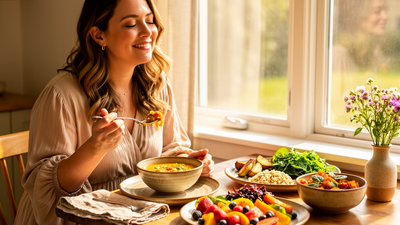
In other words, the stress of trying to eat "perfectly" can counteract the very health benefits we are trying to achieve. Healing your relationship with food means inviting your nervous system to relax. It means transitioning from a state of hyper-vigilance to a state of trust, allowing your body to rest and digest as nature intended.
Pleasure as a Vital Nutrient
Diet culture has long framed pleasure as a temptation to be resisted. We are taught to find "hacks" to bypass our cravings—substituting rich, satisfying foods with volume-heavy, flavorless alternatives in the name of health. But pleasure is not a dietary flaw; it is a biological imperative.
When we eat food that we genuinely enjoy, our bodies release dopamine and endorphins. This chemical response signals to our brain that we are satisfied. If we constantly deny ourselves the flavors and textures we desire, we often end up feeling physically full but psychologically deprived. Many women find that when they finally give themselves unconditional permission to eat the foods they love, the intense, obsessive cravings for those very foods naturally begin to dissipate.
Satisfaction is the hub of intuitive, balanced eating. A crisp, fresh salad can be deeply pleasurable on a hot summer day, just as a warm, gooey chocolate chip cookie can be profoundly satisfying on a rainy afternoon. Both offer nourishment. Both have a rightful place in a balanced life. Embracing the Richmond Balance means recognizing that joy is an essential nutrient, and a life well-lived includes savoring the foods that make your tastebuds sing.
Honoring Culture, Heritage, and Connection
Food is rarely just about sustenance; it is a bridge. It connects us to our ancestors, our heritage, and our communities. Think about the recipes passed down through generations in your family. Think about the way a specific aroma can instantly transport you back to your grandmother's kitchen or a cherished childhood holiday.
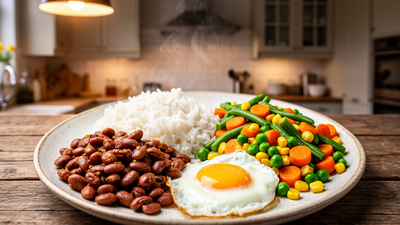
Unfortunately, the mainstream wellness industry has a history of stripping away cultural context. Traditional dishes from around the world are often unfairly demonized as "unhealthy" or are appropriated and altered to fit narrow, Eurocentric standards of "clean eating." This can create a heartbreaking disconnect, making women feel as though they must abandon their cultural foods to be deemed healthy.
Your wellness journey should never require you to leave your heritage at the door. Cultural foods provide deep soul nourishment. Sharing a meal with loved ones, celebrating traditions, and passing down recipes are practices that foster belonging and connection—which are critical components of human health. Research suggests that strong social connections and a sense of belonging are linked to lower rates of anxiety, improved immune function, and greater longevity. When we isolate ourselves to perfectly control our diets, we miss out on the profound wellness benefits of community.
Moving Away from One-Size-Fits-All
One of the most liberating realizations in healing your relationship with food is accepting that there is no single "right" way to eat. The wellness landscape is cluttered with gurus promising that if you just follow their specific protocol, you will achieve optimal health. But this one-size-fits-all approach completely ignores the beautiful complexity of human biology and lived experience.
Every woman’s body is completely unique. Your genetics, your access to fresh foods, your budget, your cultural background, your medical history, and your current season of life all dictate what nourishment looks like for you. A mother of three working two jobs will have different nutritional needs and capacities than a retired woman living alone. Someone managing a chronic illness will navigate food differently than an elite athlete.
Healing your relationship with food requires turning down the volume on external rules and turning up the volume on your internal wisdom. It is about becoming the leading expert on your own body. What makes you feel energized? What makes you feel lethargic? What foods bring you comfort? What foods leave you feeling vibrant? Trusting yourself is a radical, beautiful act of self-care.
Gentle, Actionable Steps to Nurture Your Food Relationship
If you have spent years—perhaps decades—entangled in diet culture, shifting your perspective will not happen overnight. It is a gentle, unfolding process of unlearning and relearning. Here are a few practical, compassionate ways you might try to begin nurturing a healthier relationship with food.
1. Notice Without Judgment
Awareness is the first step toward healing. For the next few days, try to simply observe your thoughts around food without trying to change them. Notice when you label a food as "good" or "bad." Notice if you feel guilt after eating a certain meal, or if you feel a sense of superiority for eating something "healthy." When these thoughts arise, greet them with gentle curiosity rather than judgment. You might say to yourself, "Isn't it interesting that my brain automatically categorized that piece of bread as 'bad'? I wonder where I learned that."
2. Invite Pleasure Back to the Table
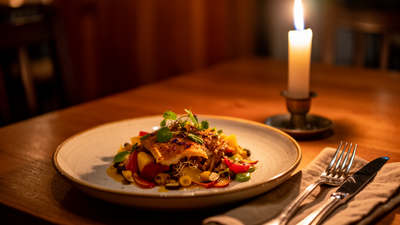
Begin to intentionally incorporate pleasure into your meals. Ask yourself, "What sounds truly satisfying right now?" If you are making a meal, consider what might enhance the experience. Could you add a flavorful sauce, a sprinkle of fresh herbs, or a handful of toasted nuts for crunch? Try to sit down while you eat, perhaps lighting a candle or playing soft music, signaling to your nervous system that it is safe to relax and enjoy.
3. Reframe Your Language
The words we use matter deeply. Try to gently remove moralizing language from your food vocabulary. Food is not "sinful," "guilt-free," "naughty," or "clean." It is just food. It is carbohydrates, proteins, fats, vitamins, and minerals. It is flavor, texture, and memory. By neutralizing our language, we slowly neutralize the emotional charge that certain foods hold over us.
4. Cultivate Connection Through Food
Look for opportunities to use food as a tool for connection rather than isolation. Invite a friend over for a messy, imperfect home-cooked meal where the focus is on the conversation, not the calorie count. Ask a family member to teach you how to make a traditional dish from your heritage. Allow food to be the backdrop for laughter, storytelling, and relationship-building.
5. Practice Body Respect
Healing your relationship with food is intimately tied to how you view your body. You do not have to love your body every single day—toxic positivity demands that we feel joyful all the time, which simply isn't realistic. But you can practice body respect. You can acknowledge that your body, regardless of its size or shape, deserves to be fed, hydrated, and cared for. You might try focusing on what your body allows you to do—hug your children, walk through a park, experience the taste of your favorite meal—rather than how it looks.
A Journey of Reconnection
Viewing your relationship with food as a wellness pillar is a paradigm shift. It moves us away from a paradigm of control and shrinking, and toward a paradigm of trust and expansion. The Richmond Balance invites you to see nourishment as a holistic, multifaceted experience that honors your humanity.
Remember, healing is not a linear path. There will be days when the old diet culture voices are loud, and there will be meals where you eat past the point of comfortable fullness. That is completely okay. It is all part of the human experience. Give yourself the grace to be a beginner in this process.
As you step forward, I invite you to take a deep, grounding breath. Look at your next meal not as a math problem to solve, but as an opportunity to care for yourself. You deserve a life where food is a source of joy, comfort, and vital energy. You deserve to take up space, to enjoy your meals, and to trust the beautiful, resilient body you call home.