Cooking for One: How to Nourish Yourself Without Waste

Discover practical ways to make cooking for one feel like self-care rather than a chore. From smart grocery strategies to freezer portions, learn how to nourish yourself deeply while reducing food waste.
Cooking for one often comes with a unique set of emotional and logistical hurdles. If you have ever stood in front of an open refrigerator, stared at a rapidly wilting head of lettuce, and thought, 'It is just me, it is not worth the effort,' you are in wonderful company. So many of us have been conditioned to believe that a beautiful, home-cooked meal is something we only create for a crowd, a partner, or a family. When we are on our own, it is incredibly easy to relegate ourselves to eating standing over the kitchen sink or settling for whatever requires the absolute least amount of dishes.
But here is a gentle truth: you are entirely worthy of the effort it takes to prepare a deeply nourishing, satisfying meal. Every woman's body, lifestyle, and capacity is entirely unique, and there is no single 'right' way to feed yourself. However, shifting our perspective on solo cooking can transform it from an exhausting daily chore into a restorative daily ritual.
Research suggests that engaging in small, creative, and sensory tasks—like chopping vegetables or stirring a simmering pot—can actually serve as a grounding mindfulness practice, helping to lower stress and transition our minds away from the demands of the workday.
If you are looking to embrace cooking for one without the frustration of food waste or flavor fatigue, here are some supportive strategies to help you find balance, pleasure, and ease in your kitchen.
Redefining Solo Cooking as Self-Care
Before we talk about groceries or meal prep, it helps to look at the mindset we bring to the kitchen. Often, the hesitation to cook for ourselves stems from a hidden belief that we are not a 'good enough' reason to make a mess in the kitchen.
Try to reframe the act of cooking as an act of self-preservation and care. Nourishing yourself is a fundamental way of communicating to your mind and body that you matter. You do not need to prepare a complex, multi-course feast to practice this. A simple bowl of warm soup or a vibrant piece of avocado toast, prepared with intention, is a beautiful act of self-care.
Smart Grocery Shopping for the Solo Cook
One of the biggest pain points of cooking for one is food waste. Grocery stores are largely designed for families of four, making it easy to end up with oversized bags of spinach that turn to mush before you can finish them.
To combat this, you might try rethinking how you navigate the aisles. The bulk section is a solo cook's best friend. Instead of buying a two-pound bag of rice or a large container of spices, you can buy exactly the half-cup of quinoa or the single tablespoon of smoked paprika you need for a specific recipe.
When it comes to the meat or seafood counter, remember that you are always allowed to ask the butcher or fishmonger to break down a package. You can absolutely ask for a single chicken thigh or one small fillet of salmon. They are usually more than happy to accommodate, and this ensures you are only taking home exactly what you will enjoy.
Befriending Resilient Produce
If you find that your fresh produce goes bad before you can eat it, it might be time to lean into ingredients that have a naturally long shelf life. While delicate greens like spring mix or arugula have a lifespan of just a few days, resilient vegetables can wait patiently in your crisper drawer for weeks.
Consider stocking up on hearty vegetables like cabbage, carrots, beets, sweet potatoes, and winter squash. Cabbage, for instance, is incredibly versatile: it can be shredded into a bright, crunchy slaw, roasted in wedges until deeply caramelized, or tossed into a comforting soup. Similarly, kale and Swiss chard last significantly longer than spinach and hold up beautifully in both raw salads and warm dishes.
For fruit, apples and citrus are wonderful, long-lasting staples. By building your meals around these sturdy ingredients, you give yourself the gift of flexibility. If you end up working late or simply do not have the energy to cook on a Tuesday, your produce will still be perfectly fine on Thursday.
Component Cooking Over Traditional Meal Prep
Many women find that traditional meal prep—making eight portions of the exact same chili or dividing identical chicken-and-broccoli meals into plastic containers—quickly leads to flavor fatigue. By day three, that meal you loved on Sunday feels entirely unappetizing.
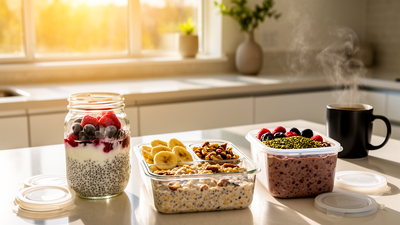
Instead of full-scale meal prep, you might try 'component cooking.' This involves preparing a few versatile ingredients that can be mixed and matched throughout the week. For example, on a Sunday afternoon, you might:
- Roast a large tray of seasonal vegetables with olive oil and sea salt.
- Cook a batch of a complex carbohydrate, like farro, brown rice, or quinoa.
- Whisk together a flavorful sauce or dressing, like a lemon-tahini drizzle or a bright vinaigrette.
- Prepare a protein of your choice, whether that is baking a few pieces of tofu, boiling some eggs, or roasting a chicken breast.
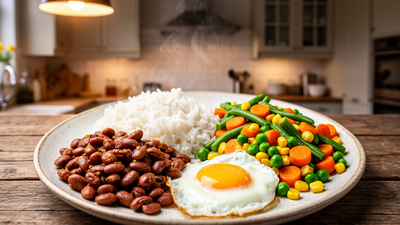
With these components waiting in your fridge, assembling a meal takes less than ten minutes. On Monday, you might warm up the grains and veggies, top them with a fried egg, and add the tahini sauce. On Tuesday, you could toss the roasted vegetables into a wrap with some hummus. On Wednesday, those same components can be thrown into a pot with some broth for a quick, comforting soup. You get the convenience of meal prep without the monotony.
The Freezer is Your Secret Weapon
The freezer is arguably the most valuable tool for anyone cooking for one. Rather than viewing it as a place where leftovers go to be forgotten, try treating your freezer like a personalized convenience store, stocked with meals crafted by your favorite chef: you.
Whenever you make a soup, stew, curry, or sauce, intentionally make a bit more than you need. Let it cool, and then freeze it in single-serving portions. Silicone freezer trays (like Souper Cubes) are fantastic for this, allowing you to freeze perfect one-cup blocks of soup that can be easily popped out and stored in a freezer bag.
Your freezer is also wonderful for preserving ingredients that tend to go bad quickly. If you buy a loaf of beautiful artisan bread, slice it immediately and freeze half. You can toast slices straight from the freezer, ensuring you never have to throw away moldy bread again. Leftover fresh herbs can be chopped, placed into ice cube trays, covered in olive oil, and frozen to be dropped into future sauces or sautés.
Setting the Scene for Yourself
When we eat alone, it is tempting to eat standing up, scrolling through our phones, or working through emails. While there is absolutely no shame in a quick, purely functional meal, taking a few extra moments to set the scene can deeply enhance your satisfaction and digestion.
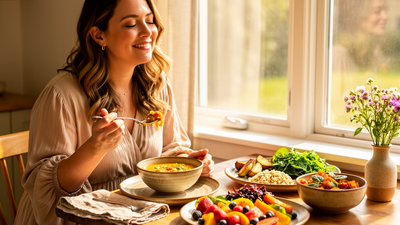
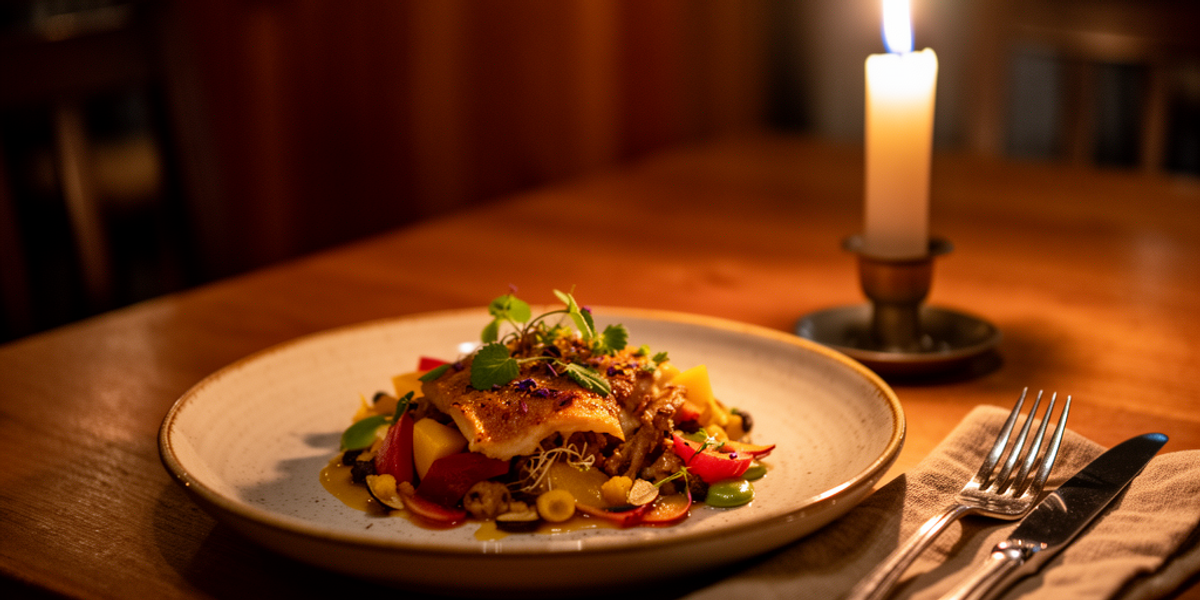
You might try plating your food on your favorite dish rather than eating out of the storage container. Pour your water or sparkling beverage into a nice glass. Light a candle. Put on a playlist that makes you feel calm and happy.
Creating a gentle, welcoming environment for yourself signals to your nervous system that it is time to rest and digest. It transforms dinner from a biological necessity into a moment of genuine pause in your day.
Honoring Low-Energy Days
It is vital to acknowledge that we are not robots. Hormonal fluctuations, stressful work weeks, emotional burnout, and the simple realities of being a human being mean that our energy levels naturally ebb and flow.
There will be days when the idea of chopping a vegetable feels like climbing a mountain. On those days, please offer yourself immense grace. Cooking for one sustainably means having a backup plan for when your energy is low.
Keep a few 'low-effort, high-comfort' staples on hand. This might look like keeping the ingredients for a beautiful, varied snack plate—some good cheese, crackers, a handful of nuts, and some fruit. It might look like keeping a box of your favorite frozen dumplings in the freezer, ready to be steamed in minutes. Or it might mean having eggs and toast for dinner.
Breakfast for dinner, a simple quesadilla, or a bowl of cereal are all morally neutral, perfectly acceptable ways to feed yourself. Honoring your body's need for rest is just as important as eating your vegetables.
A Gentle Invitation
Learning to cook for one is a journey of getting to know yourself—your cravings, your rhythms, and your boundaries. It is an ongoing practice of unlearning the idea that you need an audience to create something beautiful.
This week, I invite you to choose just one small way to elevate your solo dining experience. Perhaps it is buying a vegetable you have never tried before from the bulk bin. Perhaps it is freezing a single serving of your favorite soup for your future self. Or perhaps it is simply lighting a candle the next time you sit down to eat your leftovers.
Whatever you choose, remember that the time and energy you invest in nourishing your body is never wasted. You are, and always have been, worth the good china, the fresh ingredients, and the quiet joy of a meal made just for you.