Embracing the Mat: A Beginner's Guide to Starting Yoga at Home Without Intimidation

Intimidated by complicated poses and expensive gear? Discover how to start a gentle, supportive home yoga practice that honors your unique body, requires minimal equipment, and fits seamlessly into your busy life.
The Intimidation Factor: Why Starting Yoga Feels So Hard
If you have ever scrolled through social media and felt a wave of inadequacy wash over you while watching someone twist themselves into a human pretzel on a cliff edge, you are entirely normal. For many of us seeking a little more balance, peace, and physical ease in our daily lives, modern yoga culture can feel incredibly intimidating. It often looks less like a healing practice and more like an exclusive club for the hyper-flexible, outfitted in expensive matching sets, and armed with endless free time.
But here is the beautiful truth: that curated imagery is not the heart of yoga. At its core, yoga is simply a practice of connecting your mind, your breath, and your body. It is a tool for returning home to yourself. You do not need to look a certain way, buy a specific wardrobe, or possess the flexibility of a gymnast to begin. Every woman's body and life is different, and your yoga practice can absolutely be tailored to meet you exactly where you are today.
Whether you are a busy professional, a mother juggling endless responsibilities, or simply someone trying to find a quiet moment in a loud world, creating a home yoga practice is entirely within your reach. Let's strip away the expectations and explore how to start a home practice that feels supportive, accessible, and genuinely nourishing.
The Great Myth: "I'm Not Flexible Enough for Yoga"
Let's address the most common roadblock first. Saying you are not flexible enough for yoga is a bit like saying you are too dirty to take a bath. Flexibility is not a prerequisite for yoga; rather, it is one of the many potential byproducts of a consistent practice.
Research suggests that the physical postures (asanas) of yoga are just one small piece of a much larger system designed to regulate the nervous system and calm the mind. When we focus purely on how deep we can go into a stretch, we miss the actual magic of the practice, which is learning to breathe through mild discomfort and finding stillness in the present moment.
Your skeletal structure, your history of injuries, your daily habits, and even your genetics all play a role in how your body moves. A pose that feels deeply restorative for your best friend might feel completely inaccessible to you, and that is okay. The goal is never to force your body into a shape, but rather to use the shape to explore your body.
What You Actually Need (Spoiler: Almost Nothing)
One of the greatest barriers to starting something new is the belief that we need to buy a bunch of "stuff" to do it right. The wellness industry profits heavily off this belief, but you truly need very little to begin a home yoga practice.
The Space
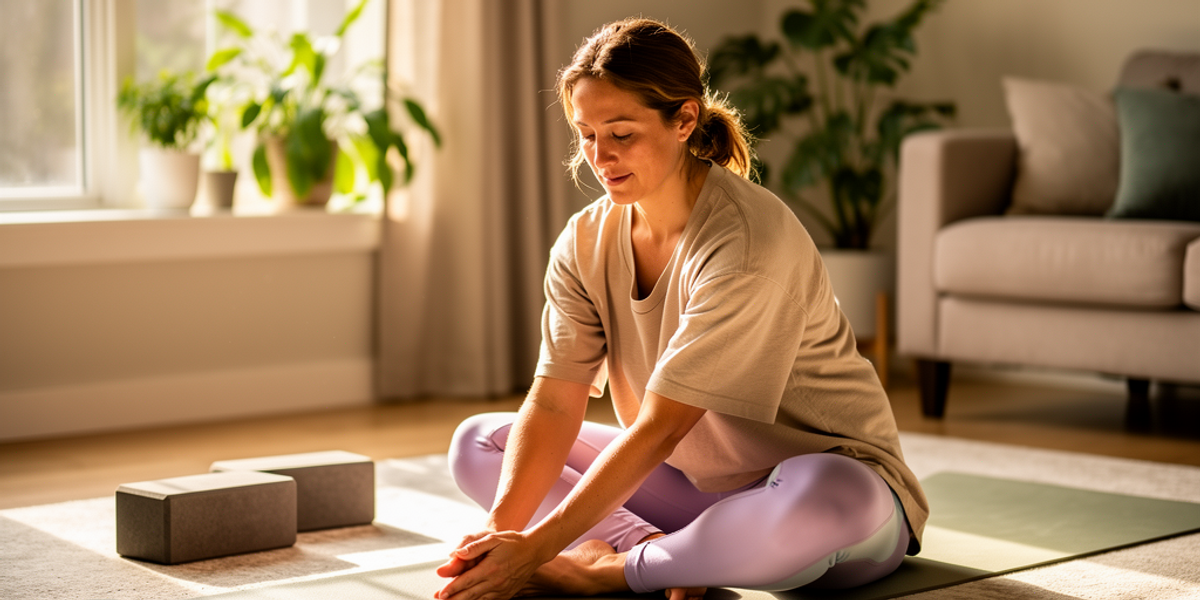
You do not need a dedicated, sun-drenched zen den. You just need a space roughly the size of a yoga mat where you won't bump into furniture. This might be the space between your bed and the wall, or a patch of carpet in the living room once the kids' toys are pushed aside.
The Gear
While a yoga mat is helpful for traction, especially on hard floors, it is not strictly necessary on day one. If you have a carpeted floor, you can start right there. If you decide to invest in a mat, a basic, inexpensive one from a local sporting goods store is perfect.
You might try using household items as yoga props. Props are not a sign of weakness; they are tools that bring the floor closer to you and make poses more accessible.
- Instead of yoga blocks: Use a couple of thick, sturdy books or large tupperware containers.
- Instead of a yoga strap: Grab a bathrobe tie, a dog leash, or an old necktie.
- Instead of a yoga bolster: Stack a few firm bed pillows or couch cushions.
The Wardrobe
Forget the expensive activewear. The best yoga clothes are simply the ones that allow you to move and breathe without restriction. Old sweatpants, an oversized t-shirt, or your favorite soft pajamas are absolutely perfect. If you feel comfortable and your breathing isn't restricted by a tight waistband, you are dressed for yoga.
Five Foundational Poses to Try at Home
When starting out, it helps to familiarize yourself with a few foundational shapes. Remember to move slowly, listen to your body's signals, and never push into sharp pain.
1. Mountain Pose (Tadasana)
It looks like you are just standing, but Mountain Pose is an active, grounding practice. It teaches us how to align our posture and find stability.
- How to do it: Stand with your feet either together or hip-width apart (many women find hip-width feels much more stable and supportive for the lower back). Press down evenly through all four corners of your feet. Let your arms hang by your sides, palms facing forward to open your chest. Gently draw your shoulders down away from your ears.
- The focus: Close your eyes if it feels safe. Notice the solid ground beneath you. Take three deep, slow breaths, feeling the crown of your head reaching toward the ceiling.
2. Child's Pose (Balasana)
This is the ultimate resting pose. It gently stretches the hips, thighs, and ankles while calming the brain and helping relieve stress.
- How to do it: Kneel on the floor. Touch your big toes together and sit on your heels, then separate your knees about as wide as your hips. Exhale and lay your torso down between your thighs. Reach your arms out in front of you or let them rest alongside your body.
- Modifications: If your hips don't reach your heels, place a rolled-up blanket or a pillow between your calves and your thighs. If your forehead doesn't comfortably reach the floor, rest it on a book or a cushion.
3. Cat-Cow (Marjaryasana-Bitilasana)
This gentle flow between two poses warms up the spine, stretches the torso, and helps synchronize your breath with your movement.
- How to do it: Start on your hands and knees in a "tabletop" position. Make sure your knees are set directly below your hips and your wrists are under your shoulders.
- Cow Pose: As you inhale, lift your sitting bones and chest toward the ceiling, letting your belly sink toward the floor.
- Cat Pose: As you exhale, round your spine outward, tucking your chin toward your chest and drawing your belly button toward your spine.
- The focus: Move slowly between these two shapes for 5 to 10 breaths, letting the length of your inhale and exhale dictate the speed of your movement.
4. Downward-Facing Dog (Adho Mukha Svanasana)
Often called a resting pose in advanced classes, Downward Dog can actually feel quite challenging for beginners. It builds strength in the arms and shoulders while stretching the hamstrings and calves.
- How to do it: From tabletop position, tuck your toes under, press into your hands, and lift your knees off the floor. Push your hips up and back, aiming to make an inverted "V" shape with your body.
- The Golden Rule for Beginners: Bend your knees! You do not need to have straight legs, and your heels do not need to touch the floor. Bending your knees allows you to lengthen your spine, which is the true goal of the pose. Press firmly into the knuckles of your hands to take the pressure off your wrists.
5. Corpse Pose (Savasana)
This is the final resting pose of almost every yoga practice. It looks like a nap, but it is actually a practice of conscious relaxation.
- How to do it: Lie flat on your back. Let your legs separate naturally and your feet flop out to the sides. Rest your arms alongside your body, palms facing up. Close your eyes.
- The focus: Allow your breathing to return to normal. Scan your body for any lingering tension—unclench your jaw, soften the space between your eyebrows, and let your shoulders melt into the floor. Stay here for anywhere from 2 to 10 minutes.
Finding Your Digital Studio: Free YouTube Channels
One of the best ways to start a home practice is by following along with guided videos. YouTube is an incredible resource for high-quality, free yoga instruction. When searching for a teacher, look for someone whose voice you find soothing and who emphasizes listening to your body over achieving a perfect pose.
Here are a few highly recommended, beginner-friendly channels:
- Yoga with Adriene: Adriene Mishler is beloved for her quirky, approachable style and her famous motto, "Find what feels good." She has several "30 Days of Yoga" series that are perfect for building a daily habit, as well as countless videos tailored to specific needs (like "Yoga for Neck Tension" or "Yoga for Vulnerability").
- Dianne Bondy Yoga: Dianne is a powerful advocate for yoga for all bodies. Her channel is an excellent resource for learning how to modify poses for larger bodies, older bodies, or anyone who finds traditional alignment cues inaccessible.
- Jessamyn Stanley: Jessamyn is a pioneer in the body-positive yoga movement. While her primary platform is an app (The Underbelly), you can find many of her beginner flows on YouTube. She teaches with humor, warmth, and a deep understanding of how to make yoga work for the body you have right now.
Cultivating Consistency Over Perfection
When we decide to start a new wellness habit, it is tempting to set massive, sweeping goals: "I am going to do 60 minutes of yoga every single morning at 5 AM."
For most women juggling real-world responsibilities, this approach is a recipe for burnout and guilt. Life is unpredictable. Some days you might have the energy and time for a full hour of movement, and other days, surviving until bedtime is your greatest accomplishment.
Many women find that setting a tiny, almost laughable goal is the secret to long-term consistency. Tell yourself you only have to do five minutes. Unroll your mat, do a few Cat-Cows, take a Child's Pose, and take ten deep breaths. If you want to keep going after five minutes, great. If you want to roll the mat back up, you have still kept the promise to yourself. You have still practiced yoga.
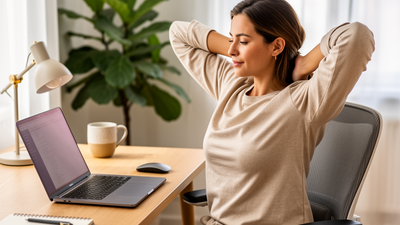
Consistency is built in the micro-moments. It is built when you choose to take three mindful breaths while waiting for the kettle to boil, or when you do a gentle neck stretch at your desk. Yoga does not only happen on a rectangular rubber mat; it happens anytime you intentionally connect your mind and your body.
An Invitation to Begin
Starting a yoga practice is not about embarking on a project of self-improvement. You do not need to be fixed, shrunk, or optimized. Yoga is simply a practice of self-compassion. It is a dedicated time to check in with yourself, to untangle the physical and mental knots of the day, and to remember that you are worthy of care and quiet.
So, this is your gentle invitation. You don't need to wait for a Monday, or the first of the month, or the day your new leggings arrive in the mail. You might try just finding a quiet corner today, kicking off your shoes, and taking one deep, intentional breath.
Welcome to your yoga practice. You are exactly where you need to be.