Exercising on Your Period: How to Move Without Making Symptoms Worse

Wondering how to exercise on your period without making cramps worse? Discover gentle movement ideas, learn what to skip, and embrace guilt-free rest days. Listen to your body and find the balance that works best for you during your cycle.
Waking up on the first day of your period often comes with a familiar, heavy sensation. Your lower back might be aching, your energy levels are likely hovering near zero, and your heating pad suddenly feels like your absolute best friend. Yet, right next to you on the nightstand, your phone lights up with a cheerful notification from your workout app, reminding you that it is time to get up and sweat.
For so many of us, this creates an immediate sense of dissonance. We are caught in a tug-of-war between the wellness habits we value and the very real, very physical demands of our menstruating bodies. The pressure to be consistent can easily morph into guilt, leaving us wondering if we should just grit our teeth and push through the discomfort.
But here is a gentle truth to hold onto: you do not have to choose between honoring your body's need for rest and maintaining your well-being. Exercising during your period doesn't have to be an all-or-nothing endeavor, and it certainly shouldn't make you feel worse. By shifting our perspective away from rigid routines and toward intuitive, supportive movement, we can find a beautiful middle ground.
Every woman's body and life is different, and there is no single right way to navigate your cycle. However, by understanding a little bit about our biology and learning to tune in to our unique needs, we can create a movement practice that actually nurtures us during our period.
The Biology of Your Period: Why You Feel Different
Before we talk about how to move, it is incredibly validating to understand why you feel the way you do. If you have ever felt frustrated by a sudden drop in your stamina or strength during the first few days of your cycle, please know that it is not in your head, and it is certainly not a lack of willpower.
Research suggests that the physiological shifts during menstruation are profound. In the days leading up to and during the beginning of your period, your levels of estrogen and progesterone drop significantly. These hormones play a huge role in everything from your energy levels and mood to your muscle recovery and joint laxity.
Additionally, your body releases hormone-like substances called prostaglandins, which trigger the uterine muscles to contract and shed the uterine lining. While prostaglandins are doing important work, higher levels of them are directly linked to more severe menstrual cramps, lower back pain, and even digestive changes. Your body is essentially experiencing a localized inflammatory response while performing a highly energy-demanding process.
When we view our periods through this biological lens, it becomes abundantly clear why a grueling, high-intensity workout might not feel great. Your body is already working hard; it makes sense to offer it support rather than additional stress.
Unlearning the "No Days Off" Mentality
One of the biggest hurdles to finding peace with movement during your period is the cultural messaging we have absorbed about exercise. For decades, diet culture and toxic fitness spaces have promoted a "no days off" mentality, suggesting that our worth is tied to our physical output and that resting is somehow equivalent to giving up.
Let's gently set that narrative aside.
True wellness is not about forcing your body into submission; it is about working in partnership with it. Sometimes, the most advanced, health-promoting choice you can make is to stay in bed, drink a warm cup of herbal tea, and do absolutely nothing. If you are experiencing debilitating cramps, heavy bleeding, or extreme fatigue, resting is not a failure—it is an active, productive choice to care for yourself. Letting go of the guilt associated with rest days is a vital step in building a sustainable, lifelong relationship with your body.
Movements That Nurture and Soothe
If you are feeling up for some movement, the right kind of exercise can actually be incredibly beneficial. Movement encourages blood circulation, which can help reduce pelvic congestion and ease cramping. It also prompts your brain to release endorphins, which are your body's natural, built-in painkillers.
When choosing how to move during your period, think about activities that feel expansive, grounding, and gentle. Here are a few beautiful options to explore:
Gentle Walking and Nature Strolls
Many women find that walking is the perfect antidote to menstrual sluggishness. It is low-impact, rhythmic, and entirely customizable to your energy levels. You don't need to aim for a specific pace or distance. Instead, focus on the simple act of putting one foot in front of the other. If you can walk outside, the fresh air and exposure to nature can also work wonders for your mood and help regulate your nervous system. A slow, twenty-minute stroll around your neighborhood can provide a gentle boost in circulation without leaving you depleted.
Restorative Yoga and Supportive Stretching
Yoga can be a balm for a menstruating body, provided we choose poses that release tension rather than build it. During your period, focus on grounding postures that open the hips and stretch the lower back, where so much congestion and pain tend to accumulate.
You might try incorporating these poses into your day:
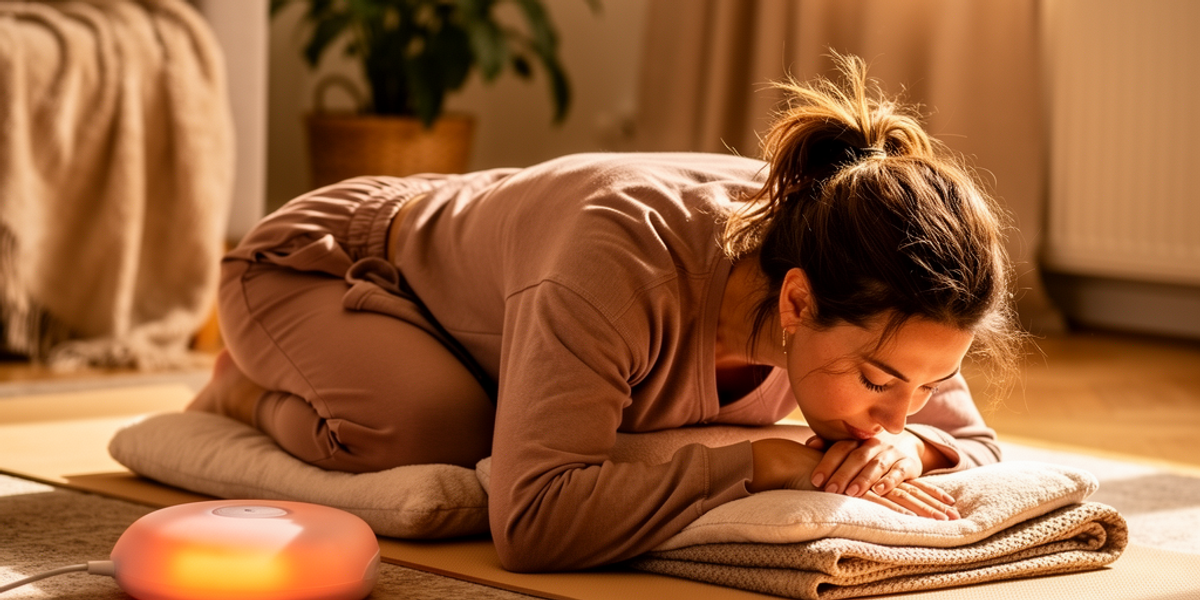
- Child's Pose (Balasana): This is deeply comforting. Kneel on the floor, bring your big toes together, and widen your knees. Walk your hands forward and rest your forehead on the mat. This gently stretches the lower back and provides a soothing, inward-focused posture.
- Cat-Cow (Marjaryasana-Bitilasana): Moving slowly between these two poses on your hands and knees helps to massage the abdominal organs, warm up the spine, and relieve tension in the pelvic region.
- Supine Spinal Twist (Supta Matsyendrasana): Lying on your back and gently dropping your knees to one side can help release a tight lower back and encourage movement in the digestive tract, which often slows down during menstruation.
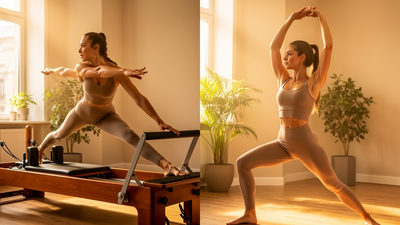
Pilates and Breath-Focused Core Work
While intense abdominal crunches might sound uniquely unappealing right now, gentle Pilates that focuses on deep core engagement and breathwork can be incredibly supportive. Focusing on the breath helps to activate the parasympathetic nervous system (our "rest and digest" state), which can lower the perception of pain. Slow, mindful movements that stabilize the pelvis without straining it can leave you feeling connected to your body rather than alienated from it.
What You Might Want to Skip (For Now)
Just as some movements can ease your symptoms, others can inadvertently amplify them. While there are no hard and fast rules—because you are the ultimate expert on your own body—there are certain types of exercise that tend to make period symptoms worse for many women.
High-Intensity Interval Training (HIIT)
HIIT workouts are designed to spike your heart rate and push your body to its limits. While this can be empowering at other times of the month, during your period, it can trigger a surge in cortisol (the stress hormone). Because your body is already managing the inflammatory stress of menstruation, adding high-intensity physical stress on top can lead to increased cramping, prolonged fatigue, and a feeling of being completely drained rather than energized.
Heavy, Maximum-Effort Strength Training
If you love lifting weights, you don't necessarily have to stop during your period. However, you might want to avoid pushing for a personal record or lifting at your absolute maximum capacity. Because of the drop in hormones, your joint laxity changes, and your core stability might feel slightly compromised. Instead of a heavy, grueling session, you might try lowering the weights, increasing the repetitions slightly, and focusing purely on the mind-muscle connection and good form.
Intense Inversions
In the yoga world, there are differing opinions on whether to practice inversions (like headstands or shoulder stands) during menstruation. From a purely physical comfort standpoint, turning upside down when you are experiencing heavy pelvic congestion and cramping often just doesn't feel good. It is perfectly okay to skip the inversions and opt for a grounding pose instead.
Practical Ways to Tune In to Your Body
Knowing the science and the suggestions is helpful, but the magic truly happens when you learn to apply this knowledge to your own unique life. Here are a few practical ways to navigate exercise during your period:
1. Embrace the 10-Minute Rule
If you are on the fence about whether to exercise or rest, try the 10-minute rule. Commit to just 10 minutes of very gentle movement—perhaps a slow stretch or a walk around the block. Once the 10 minutes are up, honestly assess how you feel. If your body is saying, "Yes, this feels good, let's keep going," then continue. If your body is saying, "I am exhausted, my cramps hurt, I want to stop," then give yourself full permission to stop immediately, with zero guilt. You tried, you listened, and you honored your needs.
2. Redefine What "Consistency" Means
We often view consistency as doing the exact same workout, at the exact same intensity, five days a week. But true consistency is simply showing up for yourself in whatever way you need on any given day. Adapting your workout to fit your menstrual cycle is not a break in consistency; it is a highly advanced form of self-care. Moving gently on a Wednesday is just as valid as a sweaty workout the following week.
3. Track Your Cycle and Your Symptoms
If you don't already, consider tracking your menstrual cycle alongside your energy levels and exercise preferences. After a few months, you will likely notice personal patterns. You might find that Day 1 and Day 2 are strictly for resting and reading, while by Day 4, you crave a long, brisk walk. Having this data allows you to plan your life and your movement with more compassion and foresight, removing the element of surprise when your energy dips.
Finding Your Unique Balance
Navigating movement during your period is an ongoing practice of self-discovery. It is about stripping away the external expectations of what a "good" workout looks like and replacing them with a deep, quiet trust in your own body's signals.
Some months, you might breeze through your period with plenty of energy, ready to maintain your regular routine. Other months, the most profound thing you can do for your health is to wrap yourself in a blanket and let your body rest. Both experiences are completely valid.
The next time your period arrives, pause before you lace up your sneakers or roll out your mat. Take a deep breath, place a hand over your lower belly, and ask yourself: What would feel truly supportive for me today?
Whatever the answer is, trust it. Your body knows exactly what it needs, and you deserve the grace to listen to it. If you found this perspective helpful, consider sharing it with a friend who might also need a gentle reminder that it is okay to soften, slow down, and move with love during their cycle.