Why You Wake Up at 3 AM (And Gentle Ways to Reclaim Your Rest)

Waking up at 3 AM is frustrating, but your body isn't broken. Explore the common reasons behind middle-of-the-night waking—from blood sugar to hormones—and discover gentle, actionable ways to support your sleep.
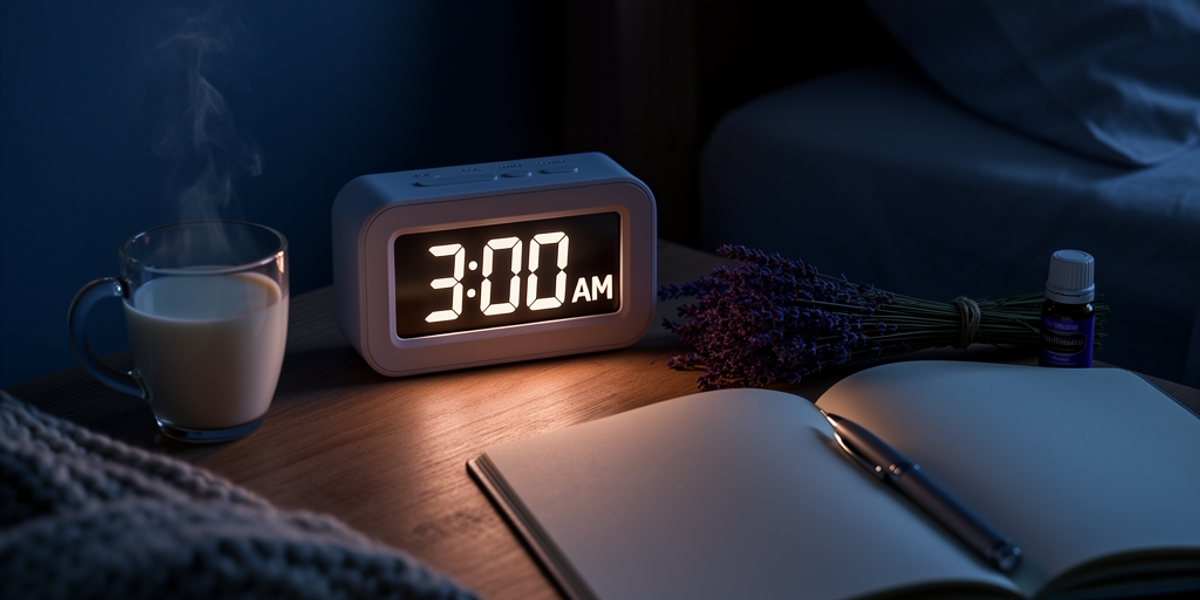
Welcome to the 3 AM club. It is a quiet, often lonely place to be. You open your eyes, glance at the clock, and feel that familiar sink in your chest. The house is silent, the world is asleep, but your mind and body are suddenly, inexplicably, wide awake.
If this happens to you frequently, please know that you are not alone, and more importantly, your body is not broken. Waking up in the middle of the night is incredibly common, especially for women juggling the demands of modern life, shifting hormones, and the mental load of everyday responsibilities.
Often, we treat these wake-ups as a personal failure—a sign that we aren't "doing sleep right." But our bodies are deeply intuitive. Waking up at 3 AM is usually your body's way of trying to communicate with you. Rather than forcing ourselves back to sleep with frustration, we can approach these wake-ups with curiosity and self-compassion.
Let's explore some of the most common reasons behind middle-of-the-night waking, along with gentle, supportive ways to help you find your way back to rest. Remember, every woman's body and life is different, so take what resonates with you and leave the rest.
The Blood Sugar Rollercoaster
We often think of blood sugar as something that only matters during the day, or something only relevant to specific health conditions. However, research suggests that our overnight blood sugar levels play a massive role in the quality of our sleep.
While you sleep, your brain is still highly active, performing essential maintenance and memory consolidation. This requires a steady supply of energy (glucose). If your blood sugar drops too low during the night—a state known as nocturnal hypoglycemia—your brain senses an emergency. To protect you, it signals your adrenal glands to release adrenaline and cortisol. These stress hormones act quickly to raise your blood sugar back to a safe level, but they also do exactly what they are designed to do: they wake you up, often with a racing heart or a feeling of mild panic.
What You Might Try
If you suspect blood sugar dips are interrupting your rest, the goal is to provide your body with sustained, slow-burning nourishment to carry it through the night.
- Honor your evening hunger: Many women find that having a gentle, nourishing snack about an hour before bed makes a profound difference. This isn't about rigid rules; it's about caring for your body's energy needs.
- Pair your nutrients: You might try a snack that pairs a complex carbohydrate with a bit of protein or healthy fat. Think of a small handful of almonds with a slice of apple, a spoonful of peanut butter on whole-grain toast, or a small cup of plain yogurt.
- Evaluate your daytime nourishment: Are you eating enough during the day? Skipping meals or running on empty can set you up for a blood sugar rollercoaster that continues into the night. Focus on deeply nourishing yourself from morning to evening.
The Cortisol Awakening Response Gone Rogue
Cortisol often gets a bad reputation as the "stress hormone," but it is actually a beautiful, necessary part of our biology. In a balanced system, cortisol naturally begins to rise in the early morning hours, peaking around the time you wake up to give you energy and alertness for the day.
However, when we are carrying a heavy mental load, experiencing chronic stress, or constantly pushing through our natural limits, our hypothalamic-pituitary-adrenal (HPA) axis can become slightly dysregulated. Instead of a gentle morning rise, you might experience a premature cortisol spike at 2 or 3 AM. Your body, sensing the accumulated stress of your daily life, essentially decides it's time to go on high alert, long before your alarm is set to ring.
What You Might Try
Addressing nighttime cortisol spikes isn't just about what you do right before bed; it's about how you signal safety to your nervous system throughout the entire day.
- Daytime decompression: Research suggests that weaving small moments of rest into your day can prevent stress from accumulating. You might try taking three deep, intentional breaths before answering an email, or stepping outside for five minutes of fresh air without your phone.
- A gentle wind-down: Create a transition space between the busyness of the day and the rest of the night. Many women find comfort in a warm bath, gentle stretching, or reading a few pages of a comforting book. Dim the lights to signal to your brain that the day's work is done.
- Morning light exposure: To help reset your natural cortisol rhythm, try to get natural sunlight in your eyes within the first hour of waking. Step out onto your porch with your morning tea or take a short walk. This helps anchor your circadian rhythm, telling your body exactly when it is daytime so it knows when it is nighttime.
Shifting Hormones and Life Transitions
As women, our bodies are beautifully cyclical and dynamic, meaning our sleep architecture often changes alongside our hormones. Whether you are navigating the natural fluctuations of your menstrual cycle, entering perimenopause, or moving through menopause, hormones deeply impact how you rest.
Progesterone, for instance, is a remarkably calming hormone. It interacts with GABA receptors in the brain to promote relaxation and deep sleep. In the days leading up to your period, or as you enter perimenopause, progesterone levels naturally drop. This decline can leave you feeling more vulnerable to wakefulness and anxiety.
Estrogen also plays a role, particularly in temperature regulation. Fluctuating or declining estrogen levels can lead to night sweats and hot flashes, which are notorious for jolting women awake in the early hours of the morning.
What You Might Try
Because hormone fluctuations are a natural part of a woman's life, the approach here is about radical support and comfort, rather than trying to "fix" a natural transition.
- Track your patterns: You might try keeping a simple journal noting where you are in your cycle (or your menopause journey) alongside your sleep quality. Many women find it deeply validating to realize, "Oh, I always wake up at 3 AM three days before my period." Simply knowing why can reduce the anxiety around it.
- Cool your environment: If temperature fluctuations are waking you up, focus on a cool sleeping environment. Breathable, natural-fiber pajamas, layered bedding that you can easily kick off, and keeping the bedroom temperature slightly cooler than the rest of the house can be incredibly supportive.
- Seek personalized support: Because every woman's hormonal landscape is unique, there is no one-size-fits-all remedy. You might explore supportive herbs like magnesium or tart cherry juice, or speak with a compassionate healthcare provider who listens to your experiences and can offer tailored guidance.
The Anxiety Loop and the "Sleep Math"
Sometimes, the initial reason you woke up—a noise, a blood sugar dip, a hot flash—passes quickly, but you stay awake because of what happens next. You look at the clock. It's 3:14 AM. You start doing the "sleep math": If I fall asleep right now, I can still get three hours of sleep.
Then the thoughts start rushing in. You remember an email you forgot to send, a conversation that felt awkward, or the overwhelming to-do list waiting for you tomorrow. This mental spinning triggers your sympathetic nervous system (fight or flight). Your heart rate increases, and suddenly, the harder you try to sleep, the more elusive it becomes. You are caught in the anxiety loop.
What You Might Try
When anxiety meets insomnia, the most powerful thing you can do is remove the pressure to sleep.
- The 20-minute invitation: Research suggests that staying in bed while feeling anxious can condition your brain to associate your bed with stress. If you've been awake for what feels like 20 minutes and you are feeling frustrated, gently get out of bed. Move to a comfortable chair in a dimly lit room. Do something soothing, like reading a magazine, listening to a gentle podcast, or knitting, until your eyelids feel heavy again.
- The bedside brain dump: If your mind is racing with to-do lists and worries, keep a notebook and pen on your nightstand. Write it all down. Tell your brain, "I have captured this. It is safe on the paper. We can look at it tomorrow."
- Practice self-compassion: Instead of berating yourself for being awake, you might try offering yourself grace. Place a hand on your heart and say, "It is okay that I am awake right now. I am resting my body even if I am not sleeping." Removing the demand for sleep often creates the exact relaxation needed for sleep to return.
Creating Your Gentle Nighttime Toolkit
Navigating 3 AM wake-ups is rarely about finding one magical cure; it is about building a gentle, personalized toolkit that supports your unique biology and lifestyle. What works beautifully for your best friend might not be what your body needs, and that is perfectly okay.
As you explore these adjustments, try to approach yourself with the same warmth and patience you would offer a dear friend. Notice how your body responds to a bedtime snack, or how your mind feels when you write down your worries. Pay attention to the subtle shifts in your energy when you prioritize daytime rest.
Your body is always on your side, even at 3 in the morning. By tuning into its signals—whether it is asking for more nourishment, deeper stress relief, hormonal support, or simply a little more grace—you can begin to rebuild a trusting relationship with your sleep.
A gentle invitation: Tonight, you don't have to change everything. Choose just one small, supportive practice from this list. Perhaps it's eating a spoonful of almond butter before brushing your teeth, or turning your alarm clock around so you can't see the time. Trust that small, compassionate acts of self-care add up, and know that you deserve to rest, deeply and peacefully.