Breaking Up with Diet Culture: A Gentle Guide to Food Freedom for Women

Discover how to identify internalized diet culture, rebuild body trust, and embrace food freedom. A gentle, evidence-aware guide for women seeking balance and peace with their plates without restrictive rules.
If you were to gather a group of women in a room and ask them to share their earliest memories of dieting, the stories would inevitably stretch back decades. You might hear about the cabbage soup phase of the 90s, the low-fat craze of the 80s, or the intricate points-tracking apps of the 2010s. For so many of us, the pursuit of shrinking our bodies has been the constant, humming background noise of our entire lives.
We have been taught that our worth is inextricably linked to our waistlines, and that true health is something we must suffer, restrict, and constantly hustle to achieve. But what happens when we finally realize that this system isn't working for us? What happens when the sheer exhaustion of chronic dieting outweighs the elusive promise of the "perfect" body?
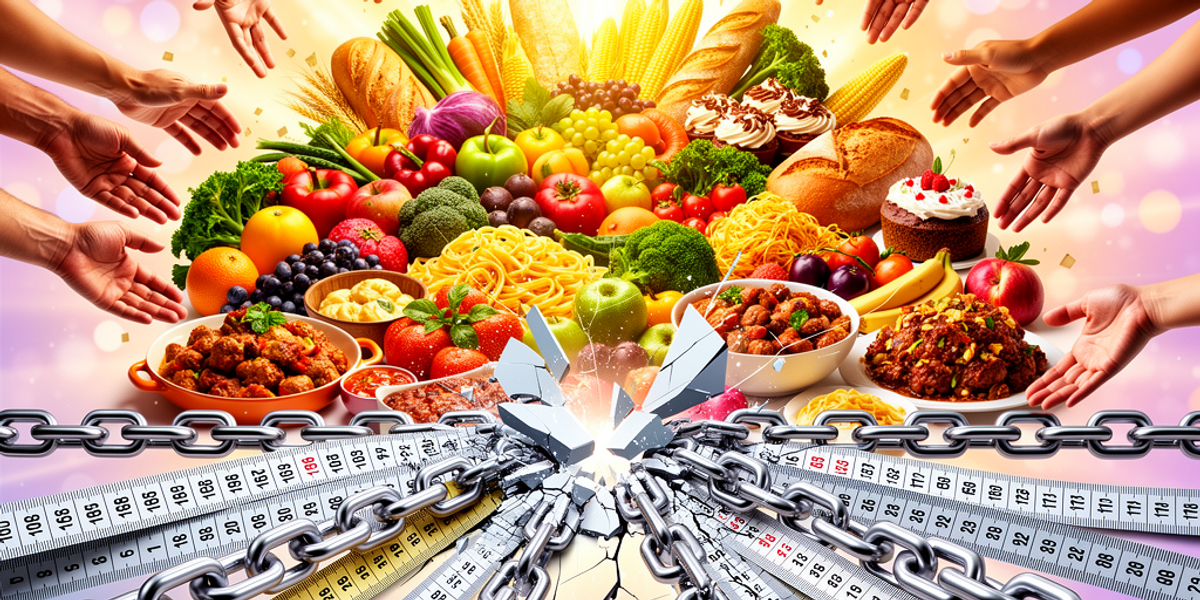
Breaking up with diet culture is not an overnight event; it is a profound, unfolding process of unlearning. It is about stepping off the pendulum of restriction and guilt, and gently walking toward a life where food is just food, and your body is a trusted friend rather than a lifelong project. If you are seeking balance in your daily life and a more peaceful relationship with your plate, you are in the right place.
The Invisible Baggage of Decades of Dieting
To understand why it is so difficult to simply "eat normally," we have to acknowledge the water we have been swimming in. Diet culture is a belief system that equates thinness with moral virtue, health, and worthiness. It promotes weight loss as a means of attaining higher status, and it demonizes certain ways of eating while elevating others.
For most women, this messaging started incredibly early. We absorbed it from magazine covers in the grocery store checkout line, from the passing comments of well-meaning relatives, and from a medical system that often prioritizes BMI over holistic well-being. Over time, these external rules become internalized. We start to police our own plates, doubting our natural hunger and ignoring our fullness.
Research suggests that chronic dieting not only disrupts our natural metabolism but also takes a profound psychological toll. The constant cycle of restricting, inevitably "failing" to maintain that restriction, and subsequent guilt creates a powerful stress response in the body. We are left feeling as though we are broken, lacking willpower, or simply not trying hard enough. But the truth is far gentler: you are not broken. The system of dieting is what is fundamentally flawed.
Spotting the Sneaky Signs of Internalized Diet Culture
One of the trickiest things about modern diet culture is that it rarely calls itself a diet anymore. It has shapeshifted into the language of "wellness," "lifestyle changes," and "clean eating." But a diet by any other name still relies on external rules to dictate what, when, and how much you should eat.
To begin breaking free, we first have to identify how diet culture is showing up in our daily lives. Many women find that internalized diet culture manifests in sneaky, subtle ways, such as:
- Assigning moral value to food: Thinking of certain foods as "good," "clean," or "guilt-free," while labeling others as "bad," "toxic," or "junk."
- Earning your meals: Feeling like you need to exercise intensely to "burn off" what you ate, or restricting your intake during the day because you have a dinner party that evening.
- Ignoring bodily cues: Pushing past hunger pangs because it isn't "time" to eat yet, or drinking copious amounts of water specifically to trick your stomach into feeling full.
- The "Last Supper" mentality: Bingeing on a specific food because you have promised yourself you will "start being good" tomorrow or on Monday.
- Body checking: Frequently analyzing your body in the mirror, weighing yourself daily, or constantly adjusting your clothes to check for changes in your size.
Recognizing these patterns is not a reason to judge yourself. In fact, it is a moment to offer yourself profound compassion. Of course you think this way—we were all rigorously trained to do so.
The Science of Restriction: Why Diets Betray Us
When we decide to step away from diet culture, a very common fear arises: If I stop restricting, won't I just eat everything in sight forever?
It is a deeply valid fear, but it helps to look at what science tells us about human biology. Research suggests that our bodies perceive intentional weight loss diets as a form of famine. When we restrict our caloric intake, our biological drive to eat amplifies. Hormones that signal hunger (like ghrelin) increase, while hormones that signal fullness (like leptin) decrease. Concurrently, our brains become hyper-fixated on food as a survival mechanism.
When you finally eat the food you have been restricting, the resulting loss of control is not a failure of willpower; it is a biological imperative. Your body is trying to save you from perceived starvation.
Many women find that when they finally give themselves unconditional permission to eat, the frantic urgency around food begins to quiet down. When your body trusts that it will be fed reliably and adequately, the intense cravings and binge episodes naturally dissipate. Food loses its forbidden allure and becomes just another part of your day.
Rebuilding Body Trust from the Ground Up
If diet culture is the process of outsourcing your bodily autonomy to an app, a meal plan, or an influencer, then food freedom is the process of bringing that authority back home to yourself. This is the foundation of body trust.
Body trust means believing that your body knows what it needs. It means trusting your hunger as a valid signal, rather than a nuisance to be suppressed. It means honoring your fullness, and knowing that your body can handle it if you occasionally eat past the point of comfort.
Because every woman's body and life is intimately different, there is no one-size-fits-all blueprint for rebuilding this trust. A mother of three working night shifts will have a very different eating rhythm than a college student or a retired woman. The goal is not to execute a perfect intuitive eating performance, but to cultivate a responsive, flexible relationship with your own unique biology.
Navigating the "Messy Middle" of Food Freedom
As you begin to let go of diet rules, you will likely enter what many refer to as the "messy middle." This is the transitional phase where you are no longer dieting, but you haven't quite found total peace with food either. It can feel chaotic, confusing, and emotionally tender.
You might find yourself gravitating heavily toward foods you previously restricted. You might experience changes in your body size, which can bring up grief, fear, or frustration. During this time, it is vital to avoid the trap of toxic positivity. You do not have to look in the mirror and passionately love every single thing about your body.
Instead, you might try aiming for body neutrality—the gentle acknowledgment that your body is the vessel that carries you through life, and it is worthy of respect and care regardless of how it looks. It is okay to grieve the "thin ideal" you were promised. It is okay to feel conflicted. Healing is rarely a linear path.
Practical Steps Toward a Peaceful Plate
While the journey to food freedom is deeply internal, there are tangible, everyday actions you can take to support your healing process. Here are a few gentle practices to consider as you rewrite your relationship with food and your body.
1. Curate Your Digital and Physical Environment
Take a close look at your social media feeds. If an account makes you feel inadequate, triggers guilt about your food choices, or promotes restrictive "wellness" hacks, give yourself permission to unfollow or mute them. Fill your feed with diverse bodies, anti-diet dietitians, and creators who inspire you to live fully. Similarly, consider donating clothes that no longer fit. Keeping a "goal weight" wardrobe in your closet is a daily, subtle reminder of diet culture's demands. You deserve to wear clothes that fit the body you have today.
2. Neutralize Your Food Vocabulary
Language holds immense power. You might try consciously shifting the way you speak about food. Instead of calling a brownie "bad" or a salad "good," try describing them by their sensory qualities or their function. A brownie is sweet, dense, and comforting. A salad is crisp, refreshing, and energizing. By stripping away the moral labels, you remove the guilt associated with eating.
3. Shift Your Focus to How You Feel, Not How You Look
Diet culture teaches us to evaluate our health by stepping on a scale. As you break up with this mindset, try broadening your definition of health. Notice your energy levels throughout the day. Pay attention to the quality of your sleep, your stress levels, and your digestion. Notice how different foods make your body feel. This internal data is far more valuable and comprehensive than a single number.
4. Redefine Movement as Joy, Not Punishment
For many women, exercise has been weaponized as a tool to burn calories or "earn" food. See if you can decouple movement from weight loss. What kind of movement actually feels good to your joints and your spirit? It might be a slow stretching routine, gardening, dancing in your kitchen, or taking a brisk walk while listening to your favorite podcast. If rest is what your body craves, honor that, too. Rest is a profoundly productive part of well-being.
A Gentle Call to Action
Walking away from diet culture is an act of profound courage. It is a rebellion against a world that profits from our self-doubt. As you embark on this path, please be gentle with yourself. There will be days when the old diet thoughts creep back in, and that is completely normal. It does not mean you are failing; it simply means you are human, unlearning decades of conditioning.
Take this journey one meal, one snack, and one breath at a time. The next time you sit down to eat, I invite you to take a gentle pause. Place a hand on your stomach or your chest, take a deep breath, and ask yourself: What sounds good to me right now? What does my body truly need?
Trust that your body knows the answer, and trust that you are entirely worthy of listening to it. Here is to reclaiming your joy, your peace, and your wonderfully full life.