Nourishing Yourself When You're Too Tired to Cook: A Gentle Guide

Exhausted at 6 PM? Discover realistic, gentle strategies for feeding yourself on low-energy days, from 10-minute assembly meals to embracing convenience foods. No guilt, just nourishment.
The 6 PM Slump is Real
Picture this: It is 6:30 PM. You have been making decisions, answering questions, and putting out fires all day long. You finally close your laptop or walk through the front door, and the sheer thought of chopping an onion feels like climbing a mountain. Your stomach is rumbling, but your energy tank is completely empty.
If this scenario sounds familiar, please know that you are not alone. Many women find that by the time evening rolls around, they have simply run out of steam. We live in a fast-paced world that demands so much of our attention and energy, leaving very little left for the basic task of feeding ourselves.
Research suggests that decision fatigue—the deteriorating quality of decisions made by an individual after a long session of decision making—peaks in the late afternoon and evening. When your brain is tired, the multi-step process of deciding what to eat, prepping ingredients, cooking, and cleaning up can feel genuinely overwhelming.
Often, the wellness industry responds to this exhaustion with rigid meal plans, complicated Sunday prep routines, or a subtle layer of guilt about not cooking everything from scratch. But toxic positivity and one-size-fits-all advice do not help when you are too tired to stand at the stove.
Instead, let's explore some realistic, gentle, and deeply supportive ways to nourish yourself when cooking is simply not on the menu.
Redefining What Makes a "Real" Meal
One of the most liberating things you can do for your evening routine is to redefine what constitutes a "real" or "proper" meal. We often hold onto this idealized image of dinner: a freshly cooked protein, a perfectly roasted vegetable, and a complex carbohydrate, all served piping hot on a beautiful plate.
While that type of meal is wonderful when you have the time and energy, it is not the only way to eat well. A meal is simply a combination of foods that provides your body with energy and nourishment. That is it. It does not have to be hot. It does not have to take an hour to make. It does not even have to be eaten at a dining table.
When we let go of the perfectionist standards surrounding dinner, we open up a world of realistic possibilities. You might try asking yourself: "What is the kindest way I can feed myself right now with the energy I have?" Sometimes, the kindest thing is a beautifully simmered stew. Other times, the kindest thing is a handful of crackers, some cheese, and a piece of fruit.
The Magic of the Assembly Meal
When you are too tired to cook, "assembly meals" are your best friend. These are meals that require zero actual cooking—just opening, combining, and plating. They are the 10-minute non-recipes that save the day when your energy is at a zero.
The Nourishing Snack Plate
Many women find immense joy and relief in the "snack plate" dinner (sometimes affectionately called "girl dinner"). This is essentially a personalized charcuterie board tailored to whatever you have in your fridge. You might try combining:
- A source of satisfaction and energy: Crackers, a slice of sourdough, or pita chips.
- A source of protein: Sliced cheese, a scoop of hummus, a handful of almonds, or deli turkey.
- Something fresh: Baby carrots, cherry tomatoes, a sliced apple, or a handful of grapes.
- Something fun: A piece of dark chocolate, some olives, or a few pickles.
There is no right or wrong way to build a snack plate. It requires zero pots and pans, and it honors your body's need for varied textures and flavors without demanding your energy.
The "Throw It In A Bowl" Method
If you prefer something that feels a bit more cohesive, the assembly bowl is a wonderful strategy. Start with a base of pre-washed greens (like baby spinach or arugula) or a pre-cooked grain (like a microwaveable pouch of brown rice or quinoa).
Top it with canned beans that you have simply rinsed (chickpeas and black beans are great for this), or some pre-cooked tofu or rotisserie chicken. Add a scoop of store-bought salsa, a drizzle of your favorite salad dressing, or a dollop of tzatziki. In under five minutes, you have a meal that is rich in fiber, protein, and flavor, with almost zero cleanup.
Embracing Convenience Foods Without Apology
For a long time, diet culture has demonized convenience foods, labeling them as "lazy" or "unclean." Let's gently toss that narrative out the window. Convenience foods are tools, and utilizing them is a form of self-care, especially for busy, exhausted women.
Frozen vegetables, for example, are picked and flash-frozen at peak ripeness, meaning they are often just as nutrient-dense as their fresh counterparts. Keeping bags of frozen broccoli, spinach, or mixed veggies in the freezer means you always have a quick addition to a meal that will not go bad in the crisper drawer.
Canned foods are another brilliant resource. Canned lentils, diced tomatoes, and coconut milk can be kept in the pantry for months. You might try simmering canned lentils with a jar of store-bought marinara sauce for a quick, comforting, and hearty meal that takes about five minutes of active effort.
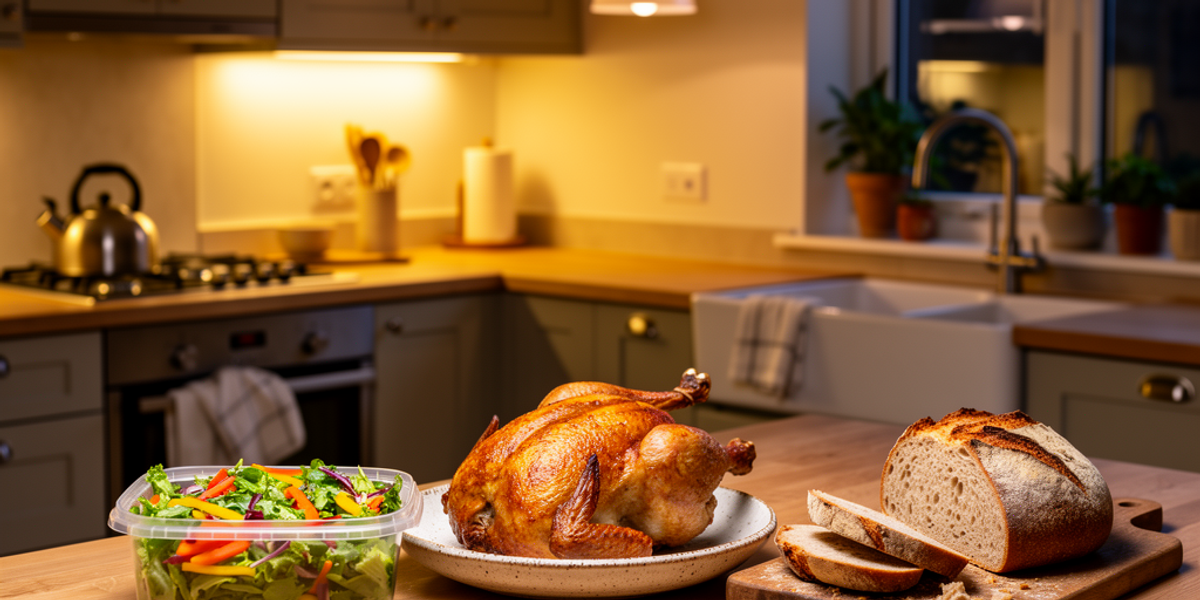
Pre-chopped vegetables, bagged salads, microwaveable grain packets, and rotisserie chickens exist to make your life easier. If buying pre-cut butternut squash means you will actually eat it instead of letting a whole squash rot on your counter because you are too tired to peel it, then the pre-cut version is the healthiest choice for you. Give yourself full permission to use these shortcuts.
Strategic Leftovers: Be Kind to Your Future Self
If you do find yourself with a burst of energy on a Sunday or a random Tuesday evening, you can use that momentum to be kind to your future, exhausted self.
However, traditional "meal prep"—where you cook five identical meals and put them in identical plastic containers—does not work for everyone. Many women find that by Wednesday, they are utterly bored with the meal they prepared on Sunday.
Instead, you might try "component prep." This means preparing a few versatile ingredients that can be quickly assembled later. For instance, you could roast a large tray of sweet potatoes and broccoli, or make a big batch of quinoa.
On a low-energy night, you can toss those sweet potatoes into a tortilla with some canned black beans and cheese for a quick quesadilla, or mix the quinoa with a bagged salad kit. You are not eating the exact same meal every day, but you have removed the most labor-intensive steps from your evening routine.
Permission to Have Cereal (or Toast) for Dinner
Let's normalize having breakfast for dinner, specifically the easiest breakfast possible: cereal or toast.
There is a deep, nostalgic comfort in a bowl of cereal at the end of a long day. If you are feeling completely depleted, a bowl of cereal with milk (dairy or plant-based) is a perfectly acceptable dinner. It provides carbohydrates for energy and comfort, and liquid for hydration.
If you want to gently boost the staying power of your cereal without adding much effort, you might try sprinkling in some hemp hearts, a handful of walnuts, or some berries. But if you just want the cereal exactly as it is, that is okay too.
Similarly, toast is a wonderfully versatile low-energy dinner. Two slices of hearty bread can be topped with peanut butter and banana, mashed avocado and a sprinkle of feta, or even just butter and a side of scrambled eggs if you have five minutes to spare.
Food is not just fuel; it is also comfort. On days when the world has felt harsh or demanding, a simple, comforting meal like toast or cereal can be incredibly soothing to your nervous system.
Honoring Your Unique Body and Life
It is so important to acknowledge that every woman's body, life, and circumstances are different. What feels like an "easy" meal to one person might still feel overwhelming to another.
If you are managing a chronic illness, dealing with neurodivergence, navigating the postpartum period, or working multiple jobs, your energy levels and capacities will look different. Please be gentle with yourself.
There is no moral value attached to how much effort you put into your dinner. Cooking a three-course meal from scratch does not make you a "better" person, and eating a frozen pizza does not make you a "worse" one. Nourishment is about taking care of your biological needs so you can show up for the parts of your life that truly matter to you.
Listen to your body. Some nights, it might crave a massive, colorful salad. Other nights, it might desperately need the warmth and ease of a grilled cheese sandwich. Both of those needs are valid, and honoring them is a beautiful practice of body trust.
A Gentle Step Forward
Feeding yourself when you are exhausted is fundamentally an act of self-compassion. The next time you hit that 6 PM slump and the thought of cooking makes you want to cry, take a deep breath. Lower the bar. Then, lower it again.
Remind yourself that "good enough" is exactly that—good enough. Whether you assemble a snack plate, heat up a frozen meal, or pour a bowl of your favorite cereal, you are doing the important work of caring for your body.
This week, you might try adding just two or three "low-energy lifesavers" to your grocery list. Grab a box of your favorite crackers, a bag of frozen edamame, or a bagged salad kit. Tuck them away in your kitchen, knowing they are there to support you on the days when you need a little extra grace. You deserve to be fed, you deserve to rest, and you deserve to let it be easy.